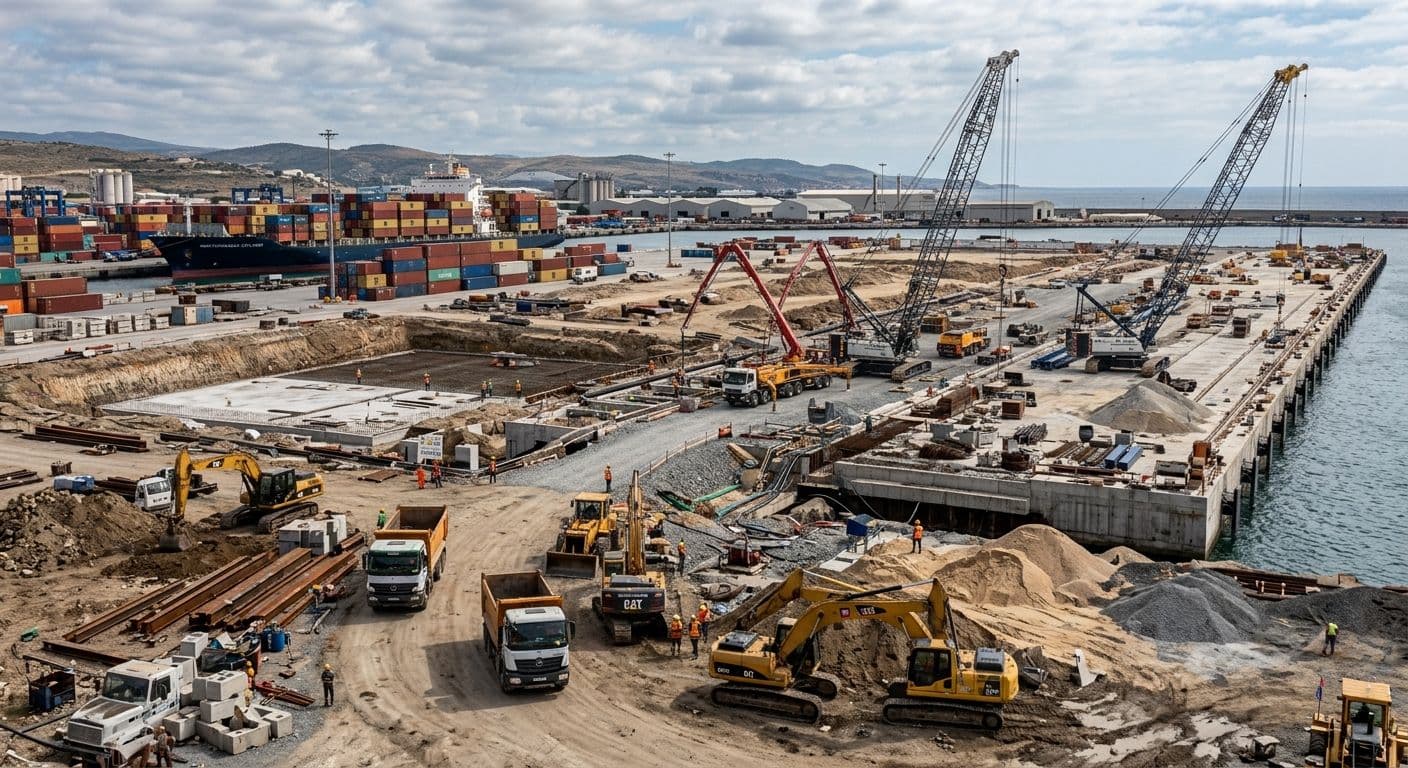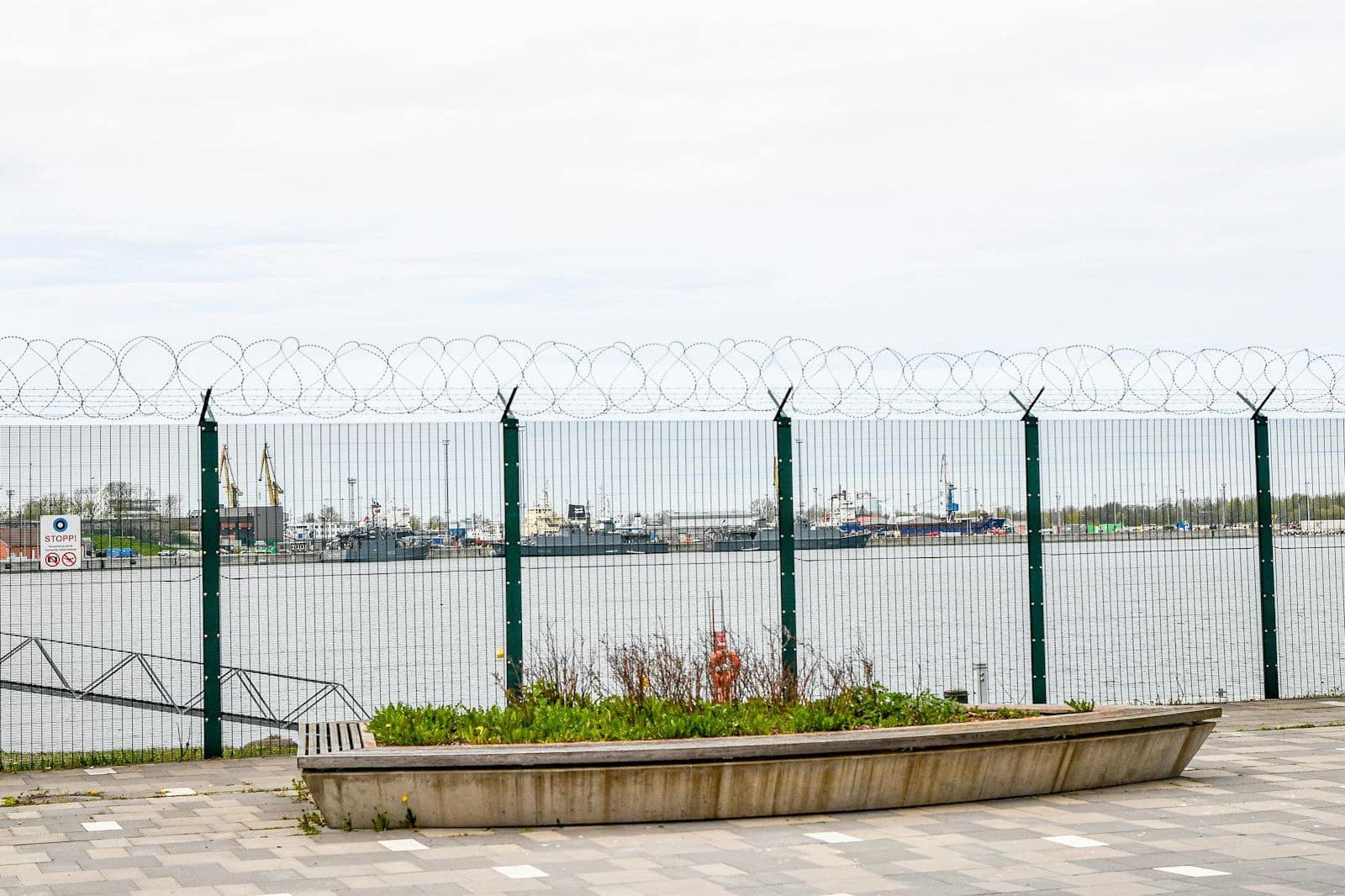


Contractor onboarding is the controlled boundary between an unprepared worker and a live terminal. On one side stand quay cranes, straddle carriers, reefer stacks, fuel lines and restricted areas governed by the international security regime. On the other side stands a person, often employed by a third party, who may have never set foot on the site. Onboarding is the structured process that decides whether, when and under what conditions that person crosses the line. Done well, it protects people, cargo and operational continuity. Done badly, it becomes the single weakest point in an otherwise well run terminal.
This article sets out a practical, step-by-step process for contractor onboarding at port terminals. It is written for terminal operations managers and HSSE managers who carry the responsibility for everyone working on site, whether those people are direct employees or contractors. The structure is deliberately sequential: company pre-qualification, worker registration, safety induction, authorisation and access, and on-site oversight, followed by close-out. Each step is a gate, and each gate exists for a reason.
Why Contractor Onboarding Matters
Terminals run on contractors. Crane maintenance, civil works, electrical and mechanical repairs, fumigation, surveying, cleaning, calibration and specialist lifting are routinely delivered by external companies. At any given moment a terminal may host workers from a dozen different employers, each with its own safety culture, its own training standards and its own assumptions about how the site works. Onboarding is what brings that fragmented population under a single, consistent standard of control.
Two bodies of obligation make this non-negotiable. First, the international security regime. The ISPS Code, adopted under SOLAS Chapter XI-2, requires port facilities to control access to the facility and to its restricted areas, and to verify the identity and purpose of those seeking entry. A contractor who has not been onboarded is, in security terms, an unverified person. Second, occupational health and safety law. Across jurisdictions, the duty holder responsible for a workplace is responsible for the safety of everyone who works there, not only its own staff. In the United States, OSHA marine terminal standards under 29 CFR Part 1917 frame the terminal operator's responsibilities. In the European Union and the United Kingdom, occupational safety law places a comparable duty of care on the controller of the premises. The principle is consistent worldwide: the terminal cannot delegate away responsibility for what happens on its site.
The cost of poor onboarding is rarely abstract. It shows up as a contractor working at height without a valid harness inspection, an electrician with an expired competency certificate energising a panel, a lifting team operating outside an agreed scope, or an uninsured company on site when an incident occurs. It shows up as a security finding when an unverified person is identified inside a restricted area. It shows up as delay when work stops because paperwork is incomplete, and as reputational and contractual exposure when an investigation reveals that the terminal admitted a worker it could not account for. Strong onboarding is not administrative overhead. It is operational risk management applied at the gate.
Step 1: Company Pre-Qualification
Onboarding begins before any individual worker is named. The first gate assesses the contracting company itself, because an individual is only ever as safe as the organisation that employs, equips and supervises them.
Company pre-qualification should establish, at minimum:
- Insurance. Valid and adequate coverage, typically employer's liability or workers' compensation and public or third-party liability, with coverage limits appropriate to the work and to the terminal's own requirements. Certificates must be current, not expired.
- Safety record and management system. Evidence of how the company manages safety: documented policies, a functioning safety management system, and an honest account of past incident history and any enforcement actions. The aim is not a perfect record but a credible, transparent one.
- Competence and certifications. Confirmation that the company holds the trade licences, accreditations or scheme memberships relevant to the work, for example for electrical work, lifting operations, working at height or confined space entry.
- Method statements and risk assessments. A documented description of how the specific job will be carried out, the hazards it presents and the controls that will be applied. This is where generic capability becomes a concrete plan for the work the terminal is actually buying.
Pre-qualification is also the point to align expectations. The terminal should make its site rules, HSSE standards and onboarding requirements explicit in writing, so the contractor knows what its workers will need before they arrive. A company that cannot produce these documents at pre-qualification will not produce them under time pressure on the day of the job. Treating this step as a genuine gate, rather than a formality, prevents most downstream problems.
Step 2: Worker Registration and Identity
Once the company is approved, onboarding moves to the individuals who will actually be on site. Worker registration answers a simple but critical question: exactly who is this person, and on whose behalf are they here?
Registration should capture and verify:
- Identity. A verified record of the individual, supported by government-issued identification, so that the person at the gate is demonstrably the person who was registered. This identity link is the foundation of every later control.
- Employer. A clear connection between the worker and an already pre-qualified company. A worker with no approved employer behind them has not completed Step 1 and should not proceed.
- Role and trade. What the person is on site to do, which determines the certifications, induction content and access they will need.
- Emergency and contact information. Next-of-kin and contact details, so that the terminal can act responsibly if something goes wrong.
The ISPS Code's emphasis on verifying identity and purpose of entry applies directly here. Worker registration is the terminal's mechanism for satisfying that requirement for contractors. It also creates the accountable record that makes everything afterwards possible: you cannot track certifications, control access or account for a person in an emergency if you were never sure who they were in the first place. For a broader treatment of how visitor and contractor populations differ, see visitor and contractor management at ports.
Step 3: Document and Certification Management
Worker registration establishes who someone is. Certification management establishes what they are permitted and competent to do, and keeps that knowledge current over time.
Most contractor work at a terminal depends on individual competencies: a valid working-at-height certificate, a confined space qualification, a forklift or plant licence, an electrical competency card, a slinger or signaller certification, a medical fitness declaration where the work requires it. Each of these documents has two properties that matter: it must be genuine, and it must be in date.
The genuine part is verified at registration. The in-date part is the harder, ongoing discipline. Certifications expire. A worker who is fully compliant in March may be working on an expired qualification by September, and nothing about their appearance at the gate will reveal it. This is where manual systems fail most often. A spreadsheet does not warn anyone. A folder of scanned PDFs does not flag that a renewal is due. The result is the slow accumulation of silent non-compliance: workers admitted day after day on documents that lapsed weeks earlier.
Effective certification management therefore has three requirements:
- A central record. Every relevant document held against the individual, not scattered across email threads and personal drives.
- Expiry tracking. Each document carries an expiry date, and the system actively flags approaching and lapsed dates rather than waiting for someone to notice.
- Enforcement at the point of access. An expired or missing certification should prevent entry, automatically, rather than relying on a gate officer to remember which document applies to which trade.
When certification management is done properly, compliance stops being a periodic audit exercise and becomes a live, continuously enforced state. The shift from paper folders to a managed digital record is covered in more detail in digitalising contractor management at port terminals.
Step 4: Safety Induction
A contractor can be employed by an excellent company and hold every valid certificate and still not know how this terminal works. The safety induction closes that gap. It is the point at which a competent outsider becomes a competent insider.
A terminal safety induction should cover the realities of the specific site, not generic safety theory the worker has heard before:
- Site-specific hazards. Vehicle and equipment movements, the behaviour of straddle carriers and internal transport, quayside edges, lifting operations overhead, reefer and hazardous cargo areas, and any current works that change the normal picture.
- Traffic and pedestrian rules. Designated walkways, segregation between people and machines, speed limits and exclusion zones.
- Emergency procedures. Alarm signals, evacuation routes, muster points, and how to raise the alarm.
- Reporting expectations. How to report hazards, near misses and incidents, and the clear message that doing so is expected.
- Site rules and standards. Personal protective equipment requirements, permit-to-work expectations, restricted areas and the conduct expected of everyone on site.
The induction should be confirmed, not assumed. There should be a record that each worker received the induction, that they understood it, and when. A digital induction makes this consistent: the same content delivered to every contractor, comprehension checked, completion logged against the individual, and easy to update when site conditions change. The link between consistent induction and incident reduction is examined in how digital safety inductions reduce incidents.
Step 5: Authorisation Tied to Scope and Area
The previous steps confirm that a company is competent, a worker is who they say they are, their certifications are valid, and they have been inducted. Authorisation is the decision that turns all of that into a specific, bounded permission.
Authorisation should never be a general grant of access to the terminal. It should be tied to:
- A defined scope of work. What the worker is approved to do, matching the method statement agreed at pre-qualification. A contractor authorised for crane maintenance is not thereby authorised to enter a fuel area or carry out unrelated work.
- A defined area. Where the worker is permitted to be. Authorisation should grant access only to the parts of the terminal the work requires, in keeping with the ISPS Code principle of controlling access to restricted areas specifically, not the site indiscriminately.
- A defined period. When the authorisation is valid: the dates and, where appropriate, the hours of the job, after which it lapses automatically.
This is also where authorisation connects to the permit-to-work system. Higher-risk activities such as hot work, work at height, confined space entry and electrical isolation require a permit in addition to onboarding, and onboarding is the precondition that makes a worker eligible to be named on one. The relationship between the two is set out in permit to work at port terminals. Scope-bound, area-bound, time-bound authorisation is what keeps onboarding meaningful: it ensures that being on site is always traceable back to a specific, approved reason.
Access Control That Enforces the Process
Onboarding only protects the terminal if access control enforces it. If the gate can be passed without completing the steps, the steps are advisory, and advisory controls fail under operational pressure.
Access control is the mechanism that makes onboarding binding. At the point of entry, the question is not whether a worker looks legitimate but whether the system confirms that the company is pre-qualified, the individual is registered, certifications are valid, the induction is complete, and a current authorisation covers the work and the area. If any element is missing or expired, entry is refused, consistently and without the gate officer having to make a judgement call under a queue of waiting vehicles.
Enforced access control also produces something valuable in its own right: an accurate, real-time record of exactly who is on the terminal, where they are authorised to be, and why. That record is essential for emergency response and mustering, it satisfies the ISPS Code expectation that the facility knows who is inside it, and it removes the ambiguity that manual gate logs always carry. When access control and onboarding are joined, the process enforces itself.
On-Site Oversight
Onboarding does not end when the worker passes the gate. The contractor is now operating inside a live terminal, and oversight is what keeps the work aligned with what was authorised.
Effective on-site oversight includes:
- Confirming work matches scope. Periodic supervision to ensure the activity in progress is the activity that was authorised, in the area that was approved.
- Permit compliance. Where a permit-to-work governs the activity, checking that its conditions are being met in practice.
- Visibility of presence. Maintaining an accurate picture of which contractors are on site at any time, supported by the access record rather than memory.
- Responsiveness to change. Updating controls when conditions change, when the job extends, or when a hazard emerges that was not foreseen at pre-qualification.
Oversight is also the feedback loop that improves onboarding. Observations from the field, what contractors got wrong, what the induction failed to convey, where scope drifted, should flow back into how future contractors are pre-qualified, inducted and authorised.
Close-Out and Sign-Off
When the work is complete, onboarding has a final gate that is often neglected: close-out.
Close-out and sign-off should confirm that:
- The work is genuinely finished or has reached a defined, safe stopping point.
- Any permits associated with the job are formally closed.
- The worksite has been left safe, with equipment removed and the area returned to normal operation.
- The contractor's access for that job is deactivated, so that authorisation does not silently persist beyond the work it was granted for.
A documented close-out matters for two reasons. It ensures that authorisations and access do not accumulate as a quiet backlog of people technically still permitted on site long after their work ended. And it creates a complete record of the engagement, from pre-qualification to sign-off, which is exactly what an audit, an investigation or a security review will ask for.
Onboarding Is an Ongoing Relationship
It is tempting to treat onboarding as a one-time event: complete the steps, admit the worker, move on. That framing is wrong, and it is the source of much silent risk.
Onboarding is the start of a relationship that has to be maintained for as long as the contractor works at the terminal. Certifications expire and must be renewed. Companies change their insurance, their staff and their safety performance. Site conditions change, and an induction delivered six months ago may no longer reflect the hazards present today. Authorisations granted for one job should not quietly carry over to the next. A contractor who returns regularly is not a fixed, solved entity; they are a record that must be kept current.
The table below summarises the process as a set of gates, each owning a distinct question.
| Step | Gate question | Primary owner |
|---|---|---|
| Company pre-qualification | Is this company competent, insured and credible? | Procurement and HSSE |
| Worker registration | Who exactly is this person and who employs them? | HSSE and security |
| Certification management | Are their competencies genuine and in date? | HSSE |
| Safety induction | Do they understand this specific site? | HSSE |
| Authorisation | What, where and when are they approved for? | Operations and HSSE |
| Access control | Does the system confirm every step before entry? | Security |
| On-site oversight | Is the work matching what was authorised? | Operations |
| Close-out | Is the work finished and access deactivated? | Operations and HSSE |
Onboarding is not the paperwork you complete to let a contractor in. It is the system that lets you account, at any moment, for everyone working on your terminal and why they are there.
How Stowlog Supports Contractor Onboarding
Stowlog is an HSSE platform built for port-logistic facilities, and contractor onboarding is one of the processes it is designed to manage end to end. Rather than spreading the steps above across spreadsheets, email and paper folders, Stowlog connects them into a single, enforced workflow.
In practice, that means company pre-qualification records and insurance held in one place, with visibility of what is valid and what has lapsed. It means worker registration with verified identity tied to a pre-qualified employer. It means certification management with active expiry tracking, so an approaching renewal is flagged before it becomes a compliance gap rather than after. It means digital safety inductions delivered consistently to every contractor and logged against the individual. It means authorisation bound to a defined scope, area and period, and access control that enforces every prior step at the gate, refusing entry when something is missing or expired. And it means a complete, auditable record of each engagement, from pre-qualification through close-out.
The objective is not to add software for its own sake. It is to make the onboarding process described here reliable: consistently applied, continuously current, and able to demonstrate, at any moment and to any auditor, exactly who is on the terminal and why. A fuller view of this approach is available in the visitor and contractor management overview.
Strong contractor onboarding does not slow a terminal down. It is what allows a terminal to bring external workers onto a live, high-hazard site quickly and confidently, knowing that every person at the quayside has passed through the same controlled boundary, for the same good reasons.
Frequently asked questions
What is contractor onboarding at a port terminal?
Contractor onboarding is the structured process a terminal uses to verify, prepare and authorise external workers before they enter the site. It typically moves through company pre-qualification, worker registration, certification management, safety induction, authorisation and access control. It is the controlled boundary between an unprepared worker and a live, high-hazard terminal.
Why can a terminal not simply rely on the contractor's own employer for safety?
Occupational health and safety law generally makes the controller of a workplace responsible for the safety of everyone working there, not only direct employees. The terminal cannot delegate that duty of care to a contracting company. Onboarding is how the terminal satisfies its own responsibility for people it did not directly hire.
How does the ISPS Code relate to contractor onboarding?
The ISPS Code, adopted under SOLAS Chapter XI-2, requires port facilities to control access to the facility and its restricted areas and to verify the identity and purpose of those seeking entry. Contractor onboarding is the practical mechanism that satisfies these requirements for external workers. Worker registration and scope-bound authorisation are the steps most directly tied to the Code.
What should company pre-qualification check?
Pre-qualification should confirm valid and adequate insurance, a credible safety record and management system, the trade certifications and accreditations relevant to the work, and documented method statements and risk assessments for the specific job. It should also make the terminal's own site rules and HSSE standards explicit in writing. A company that cannot produce these documents at this stage should not progress.
Why is certification expiry tracking so important?
Certifications such as working-at-height, confined space and electrical competencies expire, and nothing about a worker's appearance at the gate reveals a lapsed document. Manual systems like spreadsheets and PDF folders do not warn anyone, so non-compliance accumulates silently. Active expiry tracking flags approaching renewals before they become compliance gaps.
What is the difference between onboarding and a permit to work?
Onboarding qualifies a contractor to be on the terminal at all: it confirms identity, competence, induction and authorisation. A permit to work governs a specific higher-risk activity such as hot work or confined space entry. Onboarding is the precondition that makes a worker eligible to be named on a permit, and the two systems work together rather than replacing each other.
Why should authorisation be tied to a scope and an area?
A general grant of access lets a contractor go anywhere and do anything, which removes traceability and conflicts with the ISPS principle of controlling restricted areas specifically. Authorisation tied to a defined scope, area and period ensures that a worker's presence is always linked to an approved reason. It also prevents access from quietly persisting after the work has ended.
Is contractor onboarding a one-time event?
No. Onboarding is the start of a relationship that must be maintained for as long as the contractor works at the terminal. Certifications expire, insurance and company performance change, site conditions evolve, and authorisations should not carry over from one job to the next. A returning contractor is a record that must be kept continuously current.
What does close-out add to the onboarding process?
Close-out confirms that the work is finished or safely stopped, that associated permits are closed, that the worksite has been left safe, and that the contractor's access for that job is deactivated. Without it, authorisations accumulate as a backlog of people technically still permitted on site. A documented close-out also completes the audit record of the engagement.