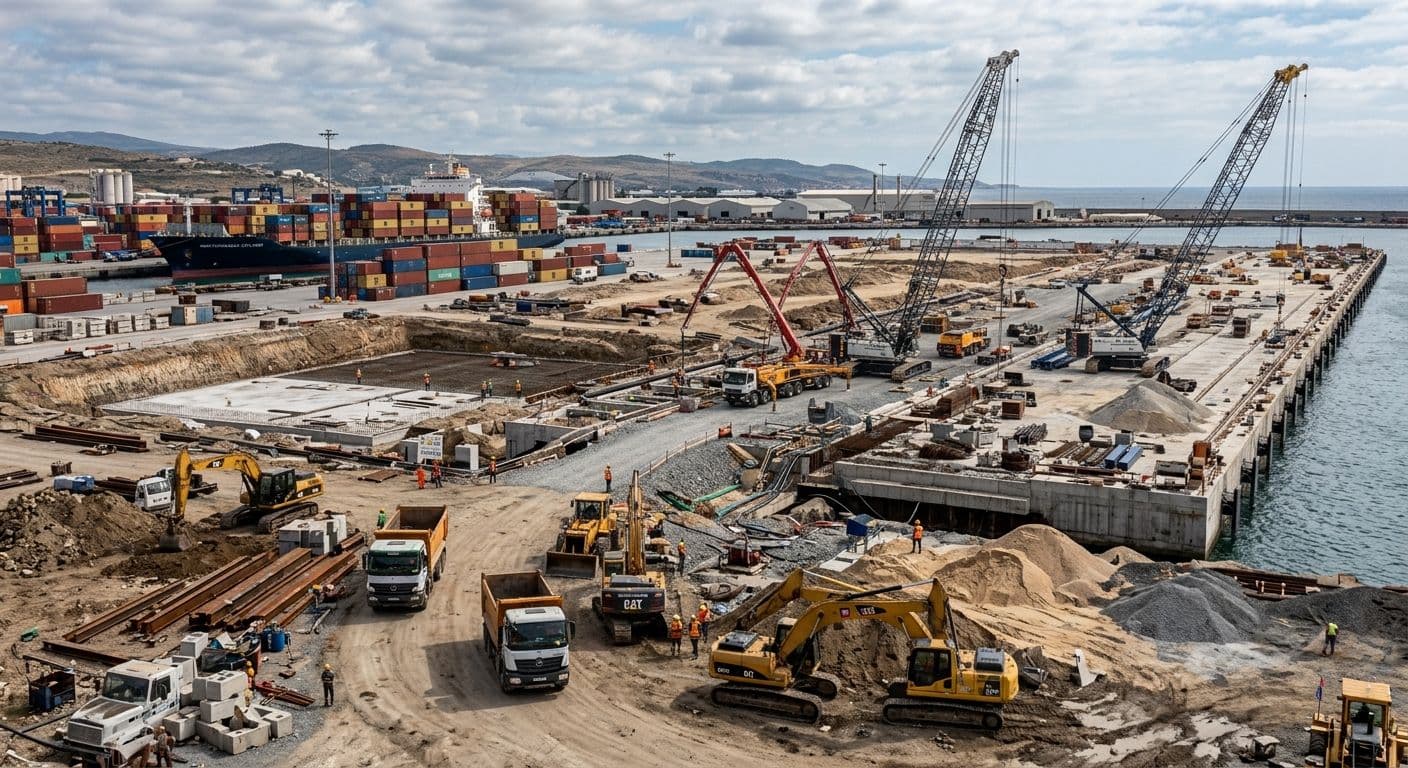


High-risk work is a permanent feature of port terminal operations. Hot work on a quay crane, entry into a ballast tank or a deep silo, maintenance at height on conveyor structures, electrical isolation on reefer racks, heavy lifts during a yard upgrade, and excavation for new pavement or services all happen alongside live cargo handling. Much of this work is performed by contractors who do not know the site, do not know the day's traffic plan, and are not present long enough to absorb the terminal's safety culture. The permit to work system is the control that makes this work safe, repeatable, and accountable.
This article explains what a permit to work system is, where it sits among other safety controls, which activities need a permit, how a permit moves through its lifecycle, the roles involved, and why paper based systems fail under operational pressure. It closes with the digital approach and how Stowlog supports permit to work as part of a connected HSSE platform.
What a Permit to Work System Is
A permit to work is a formal, documented authorisation to carry out a defined task, in a defined location, for a defined period, under a defined set of controls. It is not a substitute for risk assessment or for competence. It is the mechanism that confirms hazards have been identified, controls are in place, the right people have agreed the work can proceed, and everyone affected by the work knows it is happening.
A permit to work system does several things at once:
- It forces a structured conversation before high-risk work starts, rather than after something goes wrong.
- It records who authorised the work, on what basis, and for how long.
- It coordinates activities so that one job does not create a hazard for another.
- It provides a clear point of handback, so the area is confirmed safe before it returns to normal use.
In the hierarchy of safety controls, a permit to work is an administrative control. It does not physically remove a hazard the way elimination or engineering controls do. It works by governing human behaviour: who may do the work, when, and under what conditions. This matters because administrative controls are only as strong as the discipline behind them. A permit that is signed without a real hazard assessment, or that stays open after the work has finished, gives a false sense of safety. The value of the system lies in how rigorously it is operated, not in the existence of the form.
Permit to work also fits inside a wider HSSE management system. International occupational health and safety frameworks such as ISO 45001, and the ILO Code of Practice on Safety and Health in Ports, expect organisations to identify hazards, assess risk, and apply controls proportionate to that risk. National regimes follow the same logic. United States OSHA sets specific requirements for hot work and confined spaces in marine terminals, the United Kingdom expects safe systems of work for high-risk activities, the European Union frames duties through its occupational safety directives, and Australia applies its model work health and safety laws. The permit to work is the practical instrument that turns these general duties into a controlled task on the ground. For the broader context, see the port safety and HSSE guide.
High-Risk Activities That Need a Permit
Not every task needs a permit. The system should be reserved for work where the consequences of an uncontrolled hazard are severe and where coordination with other activities is essential. The activities below are the most common candidates at port terminals.
Hot Work
Hot work covers welding, cutting, grinding, brazing, and any activity that produces flame, sparks, or sufficient heat to ignite flammable material. Terminals handle fuels, dust, packaging, and combustible cargo residues, so an ignition source in the wrong place is a serious risk. A hot work permit confirms the area has been cleared of flammable material, that a fire watch is in place, that suitable extinguishing equipment is available, and that the atmosphere has been tested where flammable vapours could be present. It also confirms the work is not creating an ignition risk for adjacent areas or for cargo movements nearby.
Confined Space Entry
Confined spaces at terminals include tanks, silos, hoppers, ballast and void spaces, pits, and sections of large machinery. They share a common danger: an atmosphere that can be oxygen deficient, toxic, or flammable, and limited means of entry and escape. A confined space entry permit confirms the space has been isolated from inflowing material and energy, that the atmosphere has been tested and is being monitored, that ventilation is in place, that an attendant is stationed at the entry point, and that a rescue plan exists before anyone goes in. Confined space incidents frequently harm would-be rescuers, which is why the permit treats rescue arrangements as a precondition, not an afterthought.
Working at Height
Work on crane structures, conveyors, lighting masts, building roofs, and elevated walkways exposes workers to falls, and exposes people below to dropped objects. A working at height permit confirms that access equipment is suitable and inspected, that fall protection is specified and used, that exclusion zones protect people underneath, and that weather conditions, particularly wind, are within safe limits for the work and the location.
Energy Isolation and Lockout-Tagout
Maintenance on conveyors, cranes, pumps, electrical systems, and hydraulic equipment requires the energy that drives those systems to be removed and kept removed. Energy isolation, often operated through a lockout-tagout procedure, confirms that every relevant energy source, electrical, mechanical, hydraulic, pneumatic, and stored energy such as tension or gravity, has been isolated, locked, and verified at zero state before work begins. The permit links the isolation to the people working on the equipment, so it cannot be re-energised while anyone is still exposed.
Lifting Operations
Heavy or complex lifts during construction, equipment installation, or major maintenance need their own controls. A lifting permit confirms that the lift has been planned, that the crane or lifting equipment and accessories are rated and certified for the load, that the ground or quay can bear the load, that a competent person is supervising, and that the lift path is clear of people and of conflicting traffic.
Excavation
Excavation for pavement, drainage, foundations, or services introduces the risk of striking buried utilities such as power, fuel lines, water, or communications, and the risk of collapse. An excavation permit confirms that buried services have been located and either isolated or marked, that the excavation is supported or battered against collapse, and that vehicles and pedestrians are kept clear of the edge.
The Lifecycle of a Permit
A permit to work is not a single signature. It is a controlled sequence with a clear beginning, middle, and end. Each stage exists for a reason, and skipping a stage is where most failures begin.
- Request. The party that wants to carry out the work describes the task, the location, the equipment involved, the people who will perform it, and the intended time window.
- Hazard assessment. The hazards specific to that task and location are identified, drawing on the relevant risk assessment and method statement. This is where the work is examined against everything else happening in the area.
- Controls and isolations. The controls needed to make the work safe are defined and put in place. This includes physical isolations, atmospheric testing, fire watches, exclusion zones, ventilation, access equipment, and standby personnel.
- Authorisation. A person with the authority and competence to do so confirms that the hazards have been assessed, the controls are in place, and the work may proceed within stated limits.
- The work. The work is carried out within the scope, location, and time window of the permit. If conditions change, for example the scope grows or a control fails, the permit must be revisited rather than stretched.
- Handback. When the work is complete, the performing party returns the area, confirms tools and people are clear, and reports the state of any isolations.
- Closure. The issuing authority confirms the area is safe, removes isolations as appropriate, and formally closes the permit so the area returns to normal use.
The two stages most often treated carelessly are handback and closure. A permit that is never closed leaves an isolation in place that nobody owns, or leaves an area believed to be under work when it is not. Disciplined closure is what keeps the live picture accurate.
Roles and Responsibilities
A permit to work depends on a clear separation of roles. The same person should not request, authorise, and perform the work, because the system relies on independent checks.
- The issuer, or issuing authority, owns the permit. This person assesses the hazards, defines the controls, authorises the work within stated limits, and is responsible for handback and closure. The issuer must be competent in the type of work and must have authority over the area.
- The authorised person, sometimes a separate area authority, confirms that the work can be coordinated safely with other activities in the same location and that isolations are valid. In some systems the issuer and authorised person are the same role; in larger operations they are deliberately separated.
- The performing party, the contractor or in-house team carrying out the work, accepts the permit, agrees to work within its scope and controls, and is responsible for stopping work if conditions change.
Clear roles only work if the people in them are verified as competent and inducted. A permit issued to a contractor who has not completed a digital safety induction, or whose training is unverified, is a control on paper only.
Why Conflicting Permits in the Same Area Are Dangerous
The single most important coordination function of a permit to work system is preventing incompatible activities from running in the same place at the same time. Examples are easy to picture and serious in effect:
- Hot work next to a confined space being ventilated can draw sparks or fumes toward an entry point.
- Energy isolation on a conveyor for maintenance is undermined if another permit authorises a test run of the same line.
- A lift over an area where people are working at height creates a dropped-object and collision risk.
- Excavation near a structure where others are working can destabilise access or strike a service that another team depends on.
When permits are managed on paper, in different offices, or by different supervisors, nobody holds the complete picture. Two permits can be issued for the same area, on the same shift, by people who never spoke to each other. A permit to work system must therefore make all active permits visible against a shared view of the terminal, so conflicts are caught before authorisation, not discovered during an incident investigation.
Why Paper Permits Fail
Paper based permit systems are familiar, and they fail in predictable ways. The failures are rarely about bad intentions. They are about the limits of paper under operational pressure.
- No live visibility. A paper permit lives in a folder, on a clipboard, or in a cabin. There is no single place to see every active permit, so conflicts between jobs are hard to detect.
- Weak coordination. Because paper permits are physically distributed, the people issuing them cannot easily see what else is authorised in the same area on the same shift.
- Permits left open. Paper permits are routinely not closed out. Isolations stay logged as active, or areas stay marked as under work, long after the job has finished.
- No link to competence. A paper permit cannot check whether the contractor accepting it has a valid induction, current training, or the right authorisation. The check depends on someone remembering to ask.
- Illegible, incomplete, or lost records. Handwritten permits are often partially completed, hard to read, or simply mislaid, which weakens both daily control and any later audit.
- Slow to retrieve. When an auditor, a regulator, or an incident investigator asks for permits from a given period, reconstructing them from paper is slow and frequently incomplete.
None of this means the concept of a permit is flawed. It means the medium is no longer adequate for the volume, pace, and contractor mix of a modern terminal.
The Digital Approach
A digital permit to work system keeps the discipline of the permit and removes the weaknesses of paper. The structured conversation, the authorisation, the controls, and the handback all remain. What changes is visibility, control, and the connections to the rest of the safety system.
A well designed digital approach delivers several things:
- A single live view of every active permit, mapped against areas of the terminal, so conflicting work is visible before it is authorised.
- Standardised permit templates for each high-risk activity, so the right hazards and controls are prompted every time and nothing is left to memory.
- A controlled lifecycle, where a permit cannot be authorised until the required checks are complete, and an open permit is visible until it is properly closed.
- A direct link to induction and authorisation. A digital permit can confirm that the performing party has completed the relevant induction, holds current competence records, and is authorised for the site before the permit is issued. This ties the permit to the same records used in contractor management and in visitor and contractor access.
- Time-bound permits that flag when a window is about to expire, so permits are renewed deliberately or closed rather than drifting open.
The point of going digital is not to replace judgement with software. The issuer still assesses the hazards, and the performing party still controls the work. The digital system makes sure the judgement is informed by a complete picture, applied consistently, and recorded reliably.
Record-Keeping and Audits
Every permit is a record. Taken together, permits show how a terminal has controlled its high-risk work over time, and that record serves several purposes.
- Daily and shift control. Supervisors can see what is authorised now and plan accordingly.
- Audit and assurance. Internal auditors and certification bodies, for example under ISO 45001, expect to see that high-risk work is consistently assessed, controlled, and closed out. A complete, searchable permit history makes that straightforward to demonstrate.
- Regulatory inspection. Inspectors can ask to see permits for specific activities or periods. National regimes such as United States OSHA, United Kingdom, European Union, and Australian work health and safety bodies all expect employers to evidence safe systems of work.
- Incident investigation. After an incident, the permit record shows what was authorised, what controls were specified, and who agreed the work. Gaps in that record are themselves a finding.
- Trend analysis. Patterns across many permits, recurring hazards, frequent conflicts, contractors with repeated issues, point to where the safety system needs strengthening.
The table below summarises how paper and digital permit systems compare on the points that matter most for control and assurance.
| Capability | Paper permits | Digital permits |
|---|---|---|
| Live view of all active permits | Not available | Single shared view |
| Detecting conflicting work in an area | Manual and unreliable | Flagged before authorisation |
| Link to induction and competence | Depends on memory | Verified before issue |
| Closing permits out reliably | Frequently missed | Tracked until closed |
| Retrieving records for audit | Slow, often incomplete | Searchable and complete |
How Stowlog Supports Permit to Work
Stowlog is an HSSE platform built for port and terminal operations, and permit to work is one part of a connected system rather than an isolated tool.
Within Stowlog, permit to work is designed to:
- Provide standardised digital permits for hot work, confined space entry, working at height, energy isolation, lifting, and excavation, so the right hazards and controls are prompted for each activity.
- Enforce a controlled lifecycle, from request and hazard assessment through authorisation, the work, handback, and closure, so permits cannot skip steps or drift open.
- Give HSSE and operations managers a single live view of active permits across the terminal, so conflicting work in the same area is identified before it is authorised.
- Tie each permit to the same competence records used for induction and contractor management, so a permit is only issued to people who are inducted, trained, and authorised for the site.
- Keep a complete, searchable permit history, so daily control, audits, regulatory inspections, and incident investigations are supported by reliable records.
Because permit to work sits alongside induction, contractor management, and access control on one platform, the terminal works from a single, consistent picture of who is on site, what they are authorised to do, and what high-risk work is underway. For a wider view of how these elements connect, see the port safety and HSSE category.
A permit to work system is only as strong as the discipline behind it. The aim of a digital approach is to make that discipline easier to sustain shift after shift, so high-risk work at the terminal is controlled, coordinated, and accountable.
Sources and further reading
Frequently asked questions
What is a permit to work system?
A permit to work system is a formal, documented process that authorises a defined high-risk task, in a defined location, for a defined period, under a defined set of controls. It confirms that hazards have been assessed, controls are in place, the right people have agreed the work can proceed, and everyone affected knows it is happening.
Which activities at a port terminal need a permit to work?
Permits are typically required for hot work, confined space entry, working at height, energy isolation or lockout-tagout, lifting operations, and excavation. The common factor is that an uncontrolled hazard would have severe consequences and that the work must be coordinated with other activities in the same area.
Is a permit to work the same as a risk assessment?
No. A risk assessment identifies hazards and decides on controls, while a permit to work is the authorisation that confirms those controls are in place before a specific task starts. The permit relies on the risk assessment and method statement but does not replace them.
Why do paper based permit systems fail?
Paper permits offer no live view of all active work, making conflicts between jobs hard to detect, and they are routinely left open after the job is finished. They also cannot verify a contractor's induction or competence, and handwritten records are often incomplete, illegible, or lost, which weakens both daily control and later audits.
What are the main roles in a permit to work?
The issuer assesses the hazards, defines the controls, authorises the work, and handles closure. The authorised person confirms the work can be coordinated safely with other activities, and the performing party accepts the permit and carries out the work within its scope, with a duty to stop if conditions change.
Why are conflicting permits in the same area dangerous?
Incompatible activities running in the same place at the same time can create serious hazards, such as hot work near a ventilated confined space, or a test run of equipment that another team has isolated for maintenance. Without a shared view of all active permits, two conflicting permits can be issued by people who never spoke to each other.
What frameworks govern permit to work in ports?
International occupational health and safety frameworks such as ISO 45001 expect hazards to be identified, assessed, and controlled, and the ILO Code of Practice on Safety and Health in Ports is the international reference for the sector. National regimes, including United States OSHA, United Kingdom, European Union, and Australian work health and safety law, apply the same logic through their own requirements.
How does a digital permit to work system improve safety?
A digital system keeps the discipline of the permit while adding a single live view of all active permits, standardised templates for each activity, a controlled lifecycle that prevents skipped steps, and a direct link to induction and competence records. This makes conflicts visible before authorisation and ensures permits are properly closed rather than left open.
Why is closing a permit out so important?
Closure confirms that the work is finished, the area is clear, and isolations have been addressed before the area returns to normal use. A permit left open leaves an isolation that nobody owns or an area believed to be under work when it is not, which distorts the live safety picture and creates risk for the next activity.