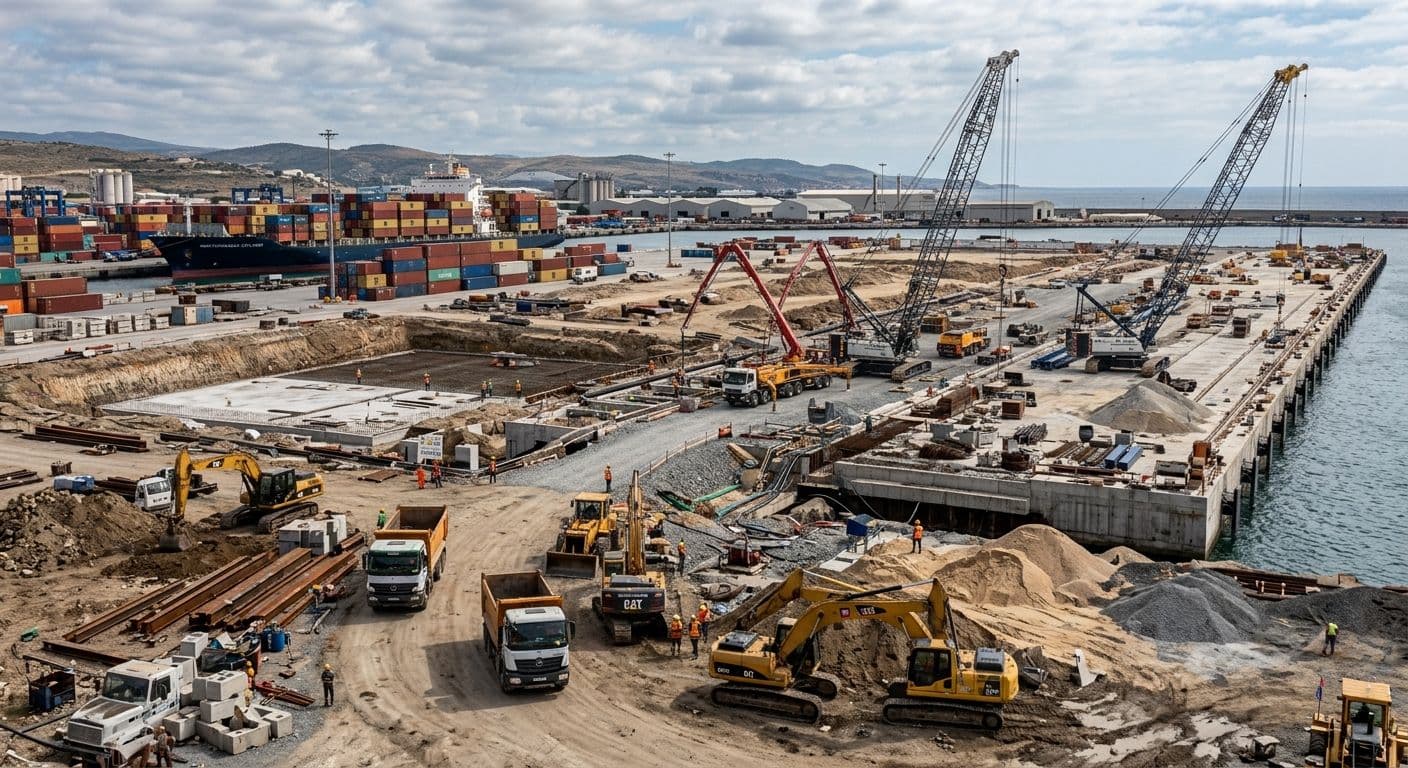

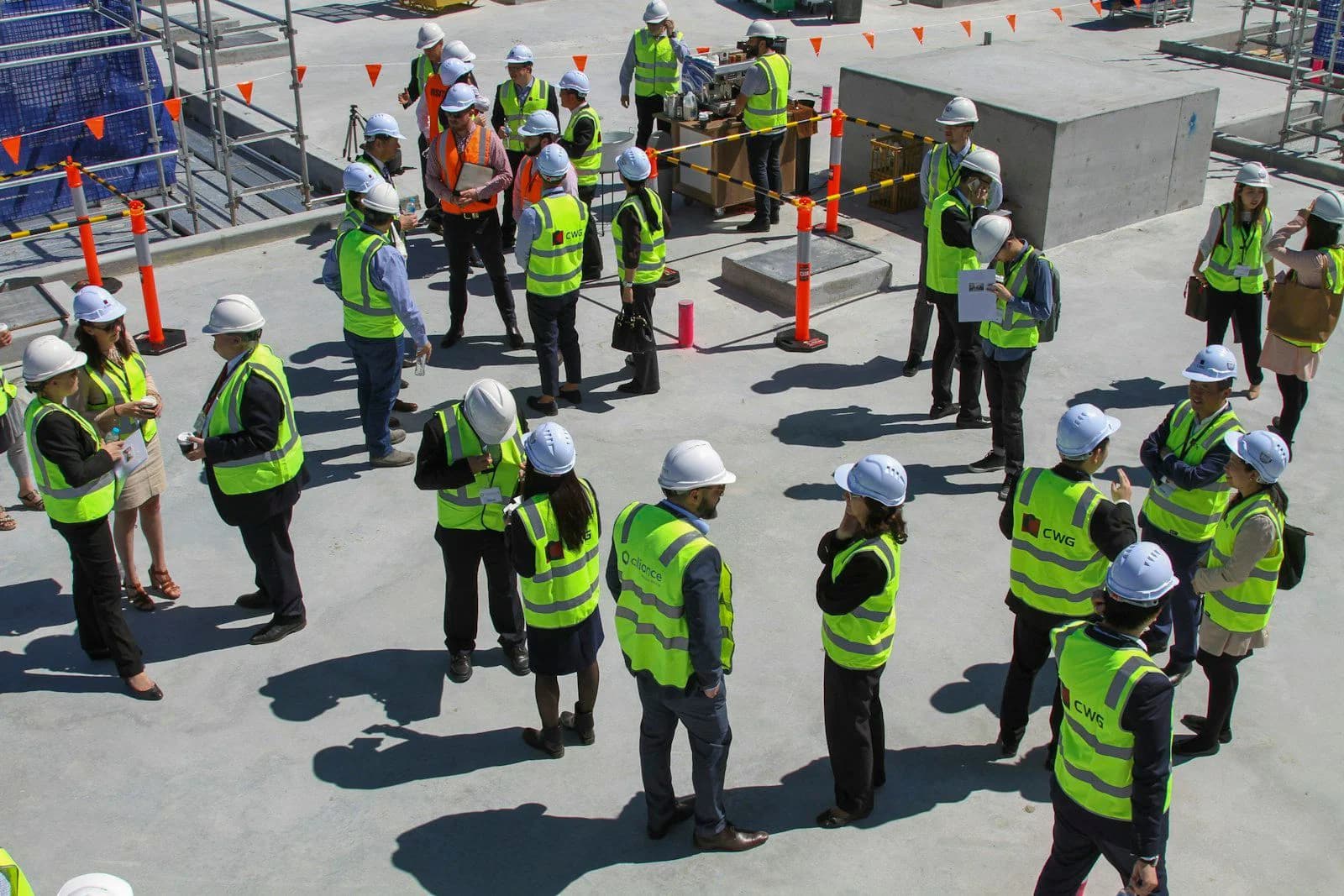
Most preventable incidents at port facilities trace back to the same root cause: someone was not adequately briefed on the hazards and rules of the area they were working in. A truck driver reverses into a stacking lane without knowing the traffic pattern. A contractor begins hot work near a fuel line because nobody explained the restricted zone. A new hire walks under a suspended load because the exclusion area was never made clear. In each case the failure is not a lack of effort or intent. It is a failure of information transfer. The safety induction exists to close that gap, but only if it is consistent, verifiable and tied to whether a person is allowed on site at all.
This article examines why the safety induction is the first line of defence in any port HSSE programme, what a credible induction actually contains, where paper-based processes fail, and how digital inductions linked to access control change the picture for terminal operators worldwide.
The induction as the first line of defence
Occupational health and safety practice organises risk controls into a hierarchy. Elimination and substitution sit at the top, followed by engineering controls, then administrative controls, with personal protective equipment as the last resort. The safety induction is an administrative control, and it is often treated as a formality because of where it sits in that hierarchy. That treatment is a mistake.
In a port environment, many of the most serious hazards cannot be engineered away. Moving cargo handling equipment, working at height, ship-to-shore interfaces, confined spaces, and mixed traffic of pedestrians and heavy vehicles are inherent to the operation. The induction is the mechanism that ensures every person entering that environment understands the hazards they cannot see, the rules that keep them apart from those hazards, and what to do when something goes wrong. It is the bridge between a well-designed safety management system and the individual standing at the gate.
International guidance reinforces this. The International Labour Organization Code of Practice on Safety and Health in Ports identifies information, instruction and training as foundational duties for any port operator. ISO 45001, the international standard for occupational health and safety management systems, requires organisations to ensure that workers are competent and aware of the hazards relevant to their work. National frameworks echo the same principle. In the United States, OSHA marine terminal regulations require employee instruction in safe practices. In the United Kingdom, the general duty to provide information and training is long established in health and safety law. The European Union framework directive on occupational safety places comparable obligations on employers, and Australian work health and safety law requires that workers receive the information and instruction necessary to protect them from risk. The wording differs by jurisdiction, but the obligation is universal: people must be informed of the hazards before they are exposed to them.
The induction is the first line of defence because it is the first point at which an organisation can confirm, person by person, that this obligation has been met.
The limits of paper inductions
A paper induction is hard to standardise and harder to prove. Most terminals that still rely on paper-based or informal briefings encounter the same recurring weaknesses.
- Content drifts between sessions. When the induction is delivered verbally or from a printed handout, the message changes depending on who delivers it, how much time they have, and what they remember to mention. Two workers inducted on the same day by different supervisors can leave with materially different understandings of the site.
- Comprehension is rarely checked. A signature on a sheet confirms attendance, not understanding. There is usually no record of whether the worker actually absorbed the emergency procedure or the traffic rules, only that they were present while it was discussed.
- Records are easy to misplace. Paper sign-in sheets are stored in folders, drawers and filing cabinets across multiple gatehouses and offices. When an auditor, an insurer or an incident investigator asks for proof that a specific person was inducted on a specific date, locating that record can take hours, and sometimes the record cannot be found at all.
- Currency is impossible to guarantee. When site rules change, a new restricted area is created, or an emergency procedure is updated, there is no reliable way to ensure that the printed material in every gatehouse reflects the change. Workers continue to be inducted from outdated documents.
- There is no link to access. A paper induction sits in a folder. It does not stop an un-inducted person from walking onto the terminal, and it does not flag when someone has an induction that has lapsed.
The result is a control that looks complete on paper but provides weak assurance in practice. After an incident, the investigation frequently finds that the induction was technically delivered but cannot be shown to have been consistent, understood, current, or connected to the person's presence on site.
What digital inductions change
A digital safety induction addresses each of these weaknesses directly. The change is not simply moving a paper form onto a screen. It is converting the induction from an unverifiable event into a managed, auditable control.
- Consistency. Every worker receives the same approved content, regardless of when they are inducted, where they are inducted, or who is on shift. The HSSE team controls a single master version. There is no drift.
- Comprehension. Built-in assessment questions confirm understanding before access is granted. A worker who cannot identify the correct emergency assembly point or the speed limit in the operational area does not pass. This shifts the induction from a passive briefing to an active check.
- Evidence. Completion is recorded automatically and time-stamped. Every induction produces a durable record showing who completed it, when, which version of the content they received, and how they performed on the assessment. The record is retrievable in seconds rather than hours.
- Currency. Content is updated centrally and takes effect immediately. When a procedure changes, the next person inducted receives the new version. There is no stock of outdated handouts to recall.
- Coverage. Because the induction is delivered through a system rather than a person, it can be completed before arrival, in the worker's own language, and at a pace that suits the individual.
These changes matter because they convert the induction into something an organisation can actually rely on. A control that is consistent, verified, evidenced and current is a control that holds up under audit and under investigation.
What a good induction actually contains
Digitising a weak induction only produces a weak induction delivered faster. The content itself has to be right. A credible port safety induction covers, at a minimum, the following areas.
- Site rules and general conduct. Speed limits, mandatory routes, mobile phone restrictions, mandatory personal protective equipment, prohibited behaviours, and the consequences of breaching them.
- Site-specific hazards. The hazards particular to that terminal: cargo handling equipment movements, container stacking operations, ship-to-shore interfaces, working at height, dangerous goods areas, dropped object zones, and any hazards specific to the commodities handled.
- Traffic management. The separation of pedestrians and vehicles, designated walkways, crossing points, blind spots around heavy equipment, reversing procedures, and the rules for interacting with straddle carriers, reach stackers, terminal tractors and quay cranes.
- Restricted and exclusion areas. Which areas require specific authorisation, which are off-limits entirely, and how exclusion zones around lifting operations and live quay edges are marked and enforced.
- Emergency procedures. Alarm signals and what each one means, evacuation routes, assembly points, how to raise an alarm, the location of firefighting and first aid equipment, and the procedure for a person overboard or a spill.
- Incident and hazard reporting. How and to whom to report a hazard or a near miss, and the expectation that everyone does so. A strong induction explicitly encourages reporting, which connects directly to a healthy near-miss reporting culture.
- Environmental and security requirements. Spill prevention, waste handling, and the security rules that apply within a regulated port facility.
The induction should also be honest about its own limits. It is an introduction, not a substitute for task-specific training, toolbox talks, or a permit-to-work where one is required. A good induction tells the worker what it does not cover and where to go for the rest.
For a fuller treatment of how these elements fit into an overall safety programme, see the port safety and HSSE guide.
How a video-based induction with assessment works before arrival
The most effective digital inductions are completed before the worker reaches the gate. The typical sequence works as follows.
- Invitation. When a visit, delivery or contractor engagement is scheduled, the relevant person receives a link to complete the induction. This can be sent days in advance.
- Delivery. The induction is presented as a sequence of short video and visual modules. Video is well suited to a port environment because it can show the actual hazards, the real traffic patterns, and the genuine layout of the terminal, rather than describing them in text. Visual demonstration of a straddle carrier's blind spots communicates far more than a paragraph.
- Assessment. After each module or at the end, the worker answers assessment questions. The questions test the points that matter most for safety, not trivia. A worker who answers incorrectly is shown the relevant material again and re-tested.
- Completion and record. On passing, the system records the completion with a time stamp, the content version, and the assessment result. The worker now holds a valid induction for that site.
- Verification at the gate. When the worker arrives, the gate or reception process confirms that a valid, current induction exists for that person. If it does not, entry is not granted until it is resolved.
Completing the induction before arrival has practical benefits beyond safety assurance. It removes the bottleneck of inducting people at the gatehouse, reduces queuing and turnaround time for trucks, and means the worker arrives ready to begin rather than spending the first part of their visit in an induction room. It also gives the worker time to complete the induction properly, in their own language, without the pressure of a queue forming behind them.
Tailoring inductions by audience
A single generic induction cannot serve every person who enters a port facility. The hazards a truck driver needs to understand are not the hazards a maintenance contractor needs to understand, and a one-time visitor does not need the same depth as a new permanent employee. Effective induction programmes tailor content by audience.
- Truck drivers and hauliers. These workers spend most of their time in the gate, parking and loading areas. Their induction should concentrate on traffic rules, designated routes, where to wait, cab-stay or get-out-of-cab rules during loading, reversing and blind-spot hazards, and what to do in an emergency while on site. It should be short, focused and available in the languages common among the haulier population serving the terminal.
- Contractors. Contractors often perform higher-risk work: maintenance, construction, hot work, working at height, confined space entry. Their induction should be more detailed, cover the permit-to-work system, explain how to obtain authorisation, and set out the site's expectations for contractor supervision and competence. Contractor induction is one element of a broader contractor onboarding process.
- Visitors. Visitors are typically escorted and do not perform work. Their induction is the shortest: where they can and cannot go, emergency procedures, the requirement to stay with their host, and basic conduct rules. The principles of managing this group are covered in more depth in visitor and contractor management.
- New permanent staff. New employees need the fullest induction, because they will work unescorted and routinely. Their induction is the entry point to a longer onboarding and competence process, including role-specific training and supervised work.
Tailoring also means tailoring by area. A person who only ever works in the administration block does not need the same induction as someone working airside on the quay. A well-structured digital induction system can assign the correct induction automatically based on the person's role and the area they are authorised to enter.
Induction expiry and re-induction
An induction is not valid forever. A person inducted three years ago has not been briefed on the rules that changed last month, and may have forgotten much of what they were told. A credible programme treats inductions as having a defined period of validity, after which a re-induction is required.
Re-induction matters in several situations.
- Time-based expiry. Inductions should carry an expiry date. The appropriate interval depends on the population and the rate of change at the site, but the principle is that an induction has a shelf life and the system should enforce it.
- After significant change. When site rules, layout, traffic patterns or emergency procedures change materially, the affected population should be re-inducted on the new content rather than waiting for their individual expiry dates.
- After an incident or absence. A worker returning after a long absence, or after involvement in an incident, may need re-induction to confirm they are current.
- Lapsed contractors. A contractor who has not been on site for an extended period should not be assumed to remember the rules. Their induction should be treated as lapsed.
A paper system cannot manage expiry in any practical way. A digital system can track the validity of every induction, flag those approaching expiry, and prevent access for anyone whose induction has lapsed. This turns re-induction from an administrative afterthought into an automatic, enforced part of the access process.
From training to access: closing the loop
The single most important capability a digital induction system provides is the link to access control. An induction that is not connected to entry is advisory. An induction that is connected to entry is a control.
The principle is simple to state: no valid induction, no entry. In practice this means the gate, reception or access process checks, for every person, that a current and complete induction exists for the site and the area they intend to enter. If it does not, the person completes the induction before proceeding, or is turned away.
This closes the loop in several important ways.
- It guarantees coverage. There is no longer a population of people who slipped onto site without being inducted. Coverage is one hundred per cent because access depends on it.
- It enforces currency. A lapsed induction blocks entry automatically. Nobody has to remember to check.
- It produces a complete record. Because access and induction are linked, the organisation can show, for any point in time, exactly who was on site and that every one of them held a valid induction.
- It supports incident investigation. After an incident, the investigation can establish immediately whether the people involved were inducted, on what version of the content, and when. The question of induction status is answered by the system, not by searching for paperwork.
The induction also connects forward into other safety processes. For higher-risk work, the induction is the precondition for entering the permit-to-work process. A contractor cannot hold a permit if they have not been inducted. In this way the induction becomes the foundation of a connected chain: induction confirms general awareness, contractor onboarding confirms competence and documentation, and the permit authorises a specific task. Each step depends on the one before it.
What to measure: induction completion as a leading indicator
Most HSSE measurement is dominated by lagging indicators: incidents, lost-time injuries, near misses recorded. These matter, but by definition they tell the organisation about events that have already happened. Leading indicators tell the organisation about the strength of its controls before an incident occurs, and induction data is a strong leading indicator.
Useful measures include the following.
- Induction coverage. The proportion of people on site holding a valid, current induction. With a connected system this should be one hundred per cent, and any deviation is itself a signal worth investigating.
- Induction currency. The number of inductions approaching or past expiry, by population. A rising figure indicates a re-induction backlog.
- Assessment performance. Pass rates and, more usefully, which questions are most often answered incorrectly. If many workers fail the question on traffic separation, that is a sign the message is not landing and the content or the operation needs attention.
- Completion before arrival. The proportion of inductions completed in advance versus at the gate, which indicates how well the process is working operationally.
- Time to induct. How long the process takes, which affects both the worker experience and gate throughput.
These measures turn the induction from a compliance task into a source of operational intelligence. Falling coverage, a re-induction backlog, or a consistently failed assessment question are all early warnings that can be acted on before they contribute to an incident.
A practical comparison
The table below summarises the difference between an unverified paper process and a connected digital induction.
| Dimension | Paper or informal induction | Connected digital induction |
|---|---|---|
| Consistency of content | Varies by deliverer and session | Single approved version for all |
| Comprehension check | Signature only, no real check | Assessment required to pass |
| Record keeping | Paper sheets, dispersed, slow to retrieve | Time-stamped, searchable, instant |
| Content updates | Outdated handouts persist | Central update, immediate effect |
| Link to access | None | No valid induction, no entry |
| Expiry management | Manual or absent | Tracked and enforced automatically |
| Audit readiness | Hours of searching, gaps likely | Evidence available on demand |
How Stowlog supports digital safety inductions
Stowlog provides digital safety inductions as part of an integrated HSSE platform for port-logistic facilities. The induction is not a standalone module. It is connected to visit scheduling, access control, contractor onboarding and permit-to-work, so that the induction does the job it is meant to do: act as a genuine control on who enters the site.
In practice, Stowlog allows an HSSE team to:
- Build and maintain induction content centrally, including video modules and assessment questions, with a single approved version in force at any time.
- Assign the correct induction automatically based on the person's role and the areas they are authorised to enter, so truck drivers, contractors, visitors and staff each receive the appropriate content.
- Send inductions ahead of a scheduled visit so they are completed before arrival, reducing queues at the gate and turnaround time for trucks.
- Record every completion with a time stamp, content version and assessment result, producing an audit-ready evidence trail that is retrievable in seconds.
- Set validity periods and manage re-induction automatically, flagging and blocking lapsed inductions.
- Link induction status directly to access, so that no valid induction means no entry, and connect it forward into contractor onboarding and permit-to-work.
The objective is straightforward. The induction should stop being a document in a folder and become a reliable, measurable control that demonstrably reduces the chance of a preventable incident. For more on the wider HSSE practices this supports, see the port safety and HSSE resources.
Conclusion
Preventable incidents at port facilities are, in a large share of cases, information failures. Someone did not know a rule, a hazard or a procedure that would have kept them safe. The safety induction is the control designed to prevent exactly that, but a paper induction is too inconsistent, too unverifiable and too disconnected from access to do the job reliably.
A digital safety induction changes that. It guarantees consistent content, verifies comprehension, produces durable evidence, keeps content current, and, most importantly, links the induction to whether a person is allowed on site at all. When the induction is connected to access control, contractor onboarding and permit-to-work, it stops being a formality and becomes the genuine first line of defence it was always intended to be.
Frequently asked questions
What is a digital safety induction at a port facility?
It is a structured safety briefing delivered through software rather than on paper or verbally, covering site rules, hazards, traffic management, restricted areas and emergency procedures. It typically includes video modules and assessment questions, and it records each completion automatically with a time stamp. When linked to access control, it determines whether a person is allowed onto the terminal.
How does a digital induction actually reduce incidents?
It reduces incidents by ensuring every worker receives consistent, current content and by verifying they understood it before granting access. Because the induction is linked to entry, there is no population of un-inducted people on site, which closes the most common information gap behind preventable incidents.
Are paper inductions still acceptable for compliance?
A paper induction can satisfy the basic legal duty to inform workers of hazards, but it provides weak assurance in practice. It is hard to prove the content was consistent, that comprehension was checked, or that records are complete and current. Digital inductions meet the same duty while producing far stronger, audit-ready evidence.
Should inductions be different for truck drivers, contractors and visitors?
Yes. Each group faces different hazards and performs different activities, so the induction content should be tailored accordingly. Truck drivers need focused traffic and loading rules, contractors need detail on permit-to-work and higher-risk activities, and visitors need a short briefing centred on escort rules and emergency procedures.
How often should a safety induction be renewed?
Inductions should carry a defined validity period and expire, with the interval depending on the site and population. Re-induction should also be triggered when site rules, layout or emergency procedures change materially, and after long absences or involvement in an incident. A digital system can track expiry and enforce re-induction automatically.
What international standards apply to port safety inductions?
The International Labour Organization Code of Practice on Safety and Health in Ports is the primary international reference, and it identifies information, instruction and training as core duties. ISO 45001 requires organisations to ensure workers are competent and aware of relevant hazards. National frameworks such as OSHA marine terminal regulations and equivalent laws in the United Kingdom, European Union and Australia impose comparable obligations.
Can a worker complete the induction before arriving at the terminal?
Yes, and this is the recommended approach. When a visit or delivery is scheduled, the worker receives a link and completes the video-based induction and assessment in advance. This reduces queuing at the gate, improves truck turnaround time, and lets the worker complete the induction properly in their own language.
How does induction completion work as a safety metric?
Induction completion is a leading indicator, meaning it reflects the strength of a control before an incident occurs rather than after. Useful measures include induction coverage, the number of inductions approaching expiry, and assessment pass rates by question. A consistently failed question or a falling coverage rate is an early warning that can be acted on.
How does the induction connect to permit-to-work and contractor onboarding?
The induction is the foundation of a connected chain of controls. It confirms general site awareness, contractor onboarding confirms competence and documentation, and the permit-to-work authorises a specific high-risk task. A worker cannot progress to onboarding or hold a permit without a valid induction in place.