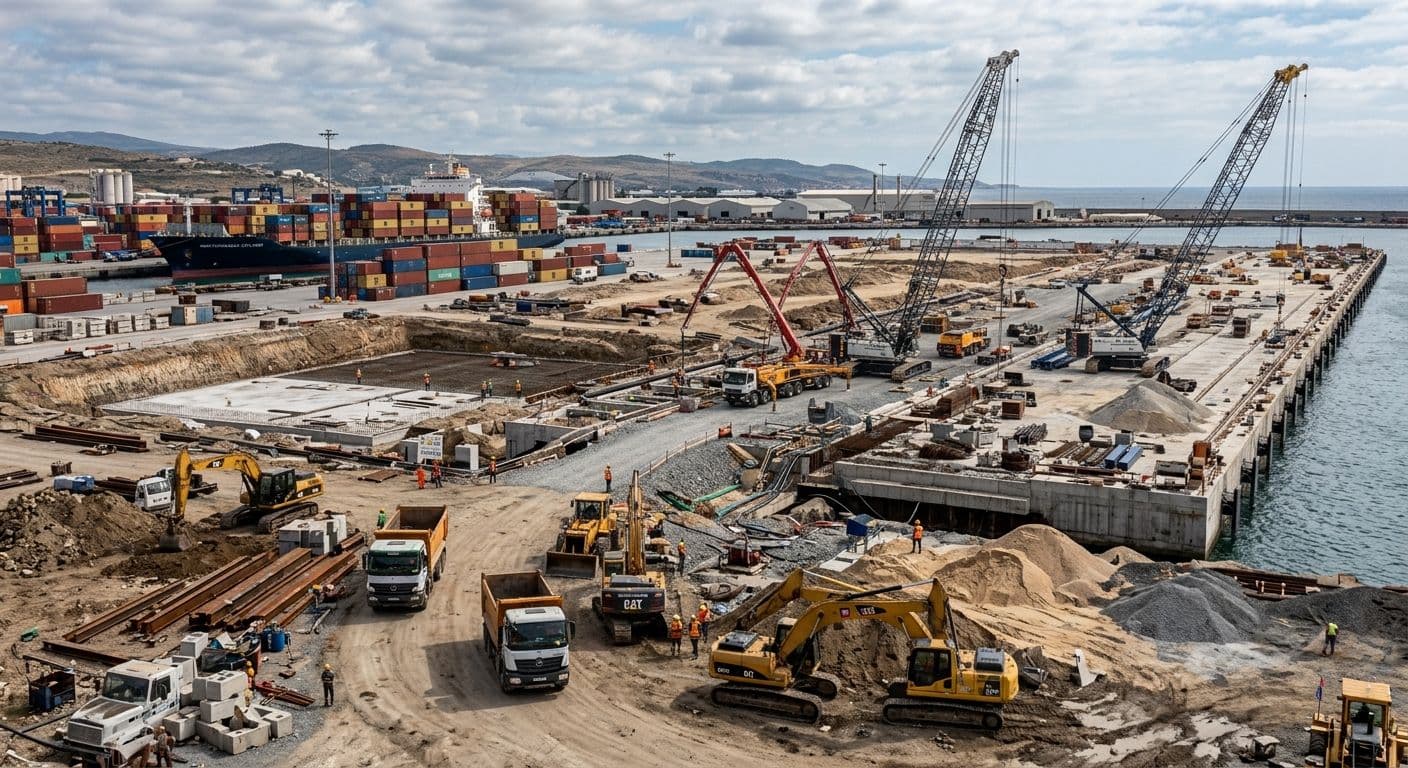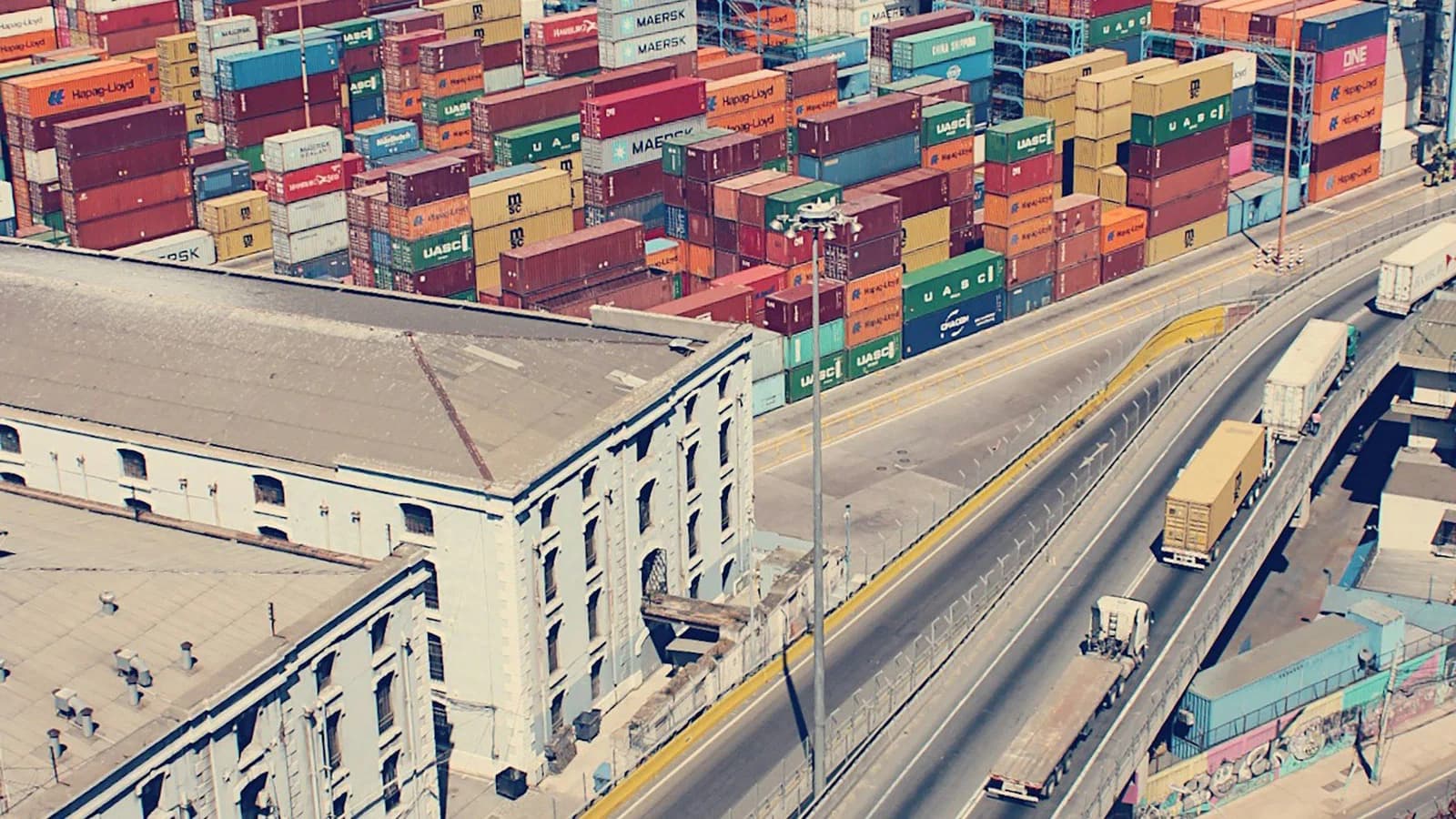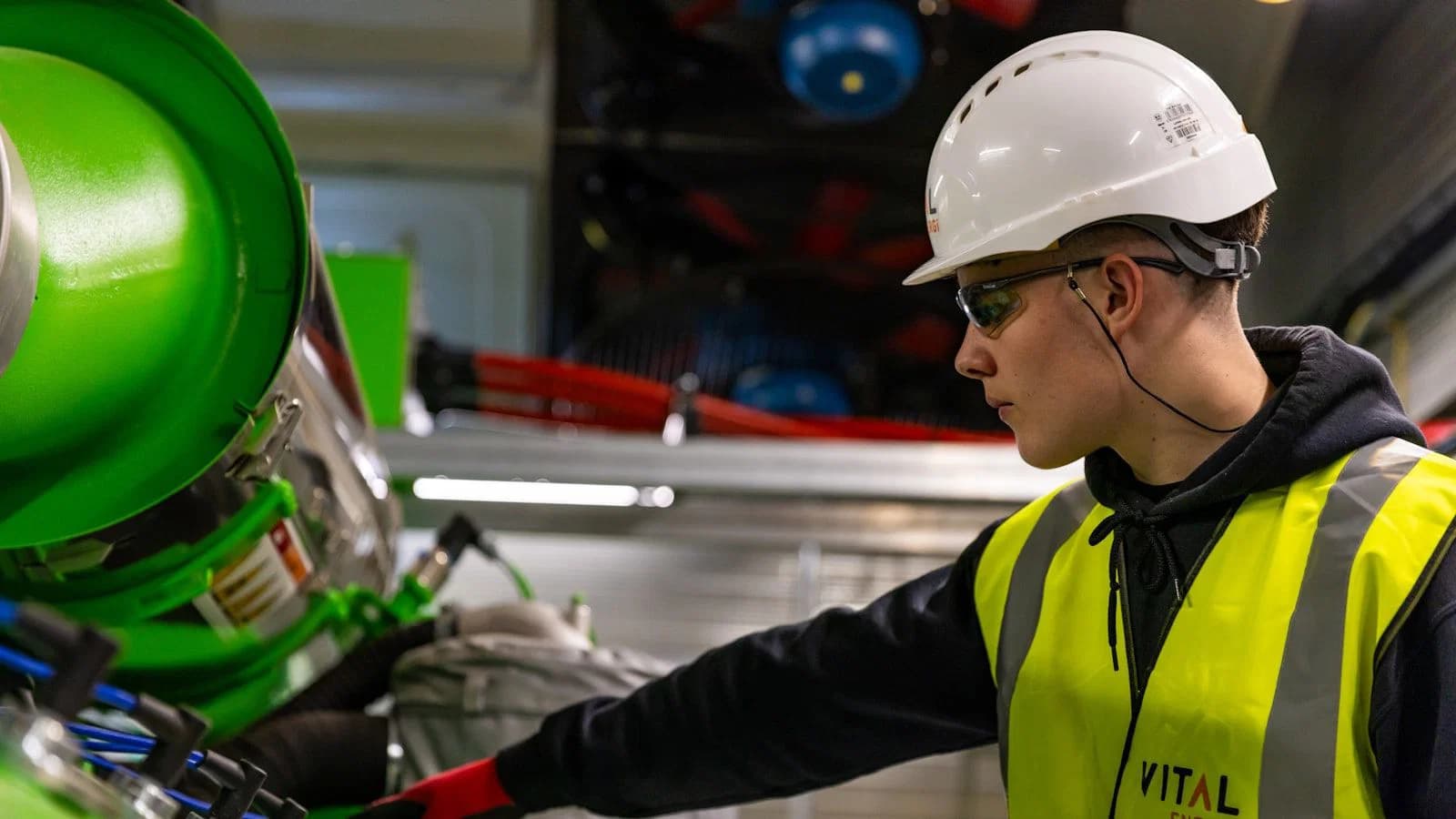

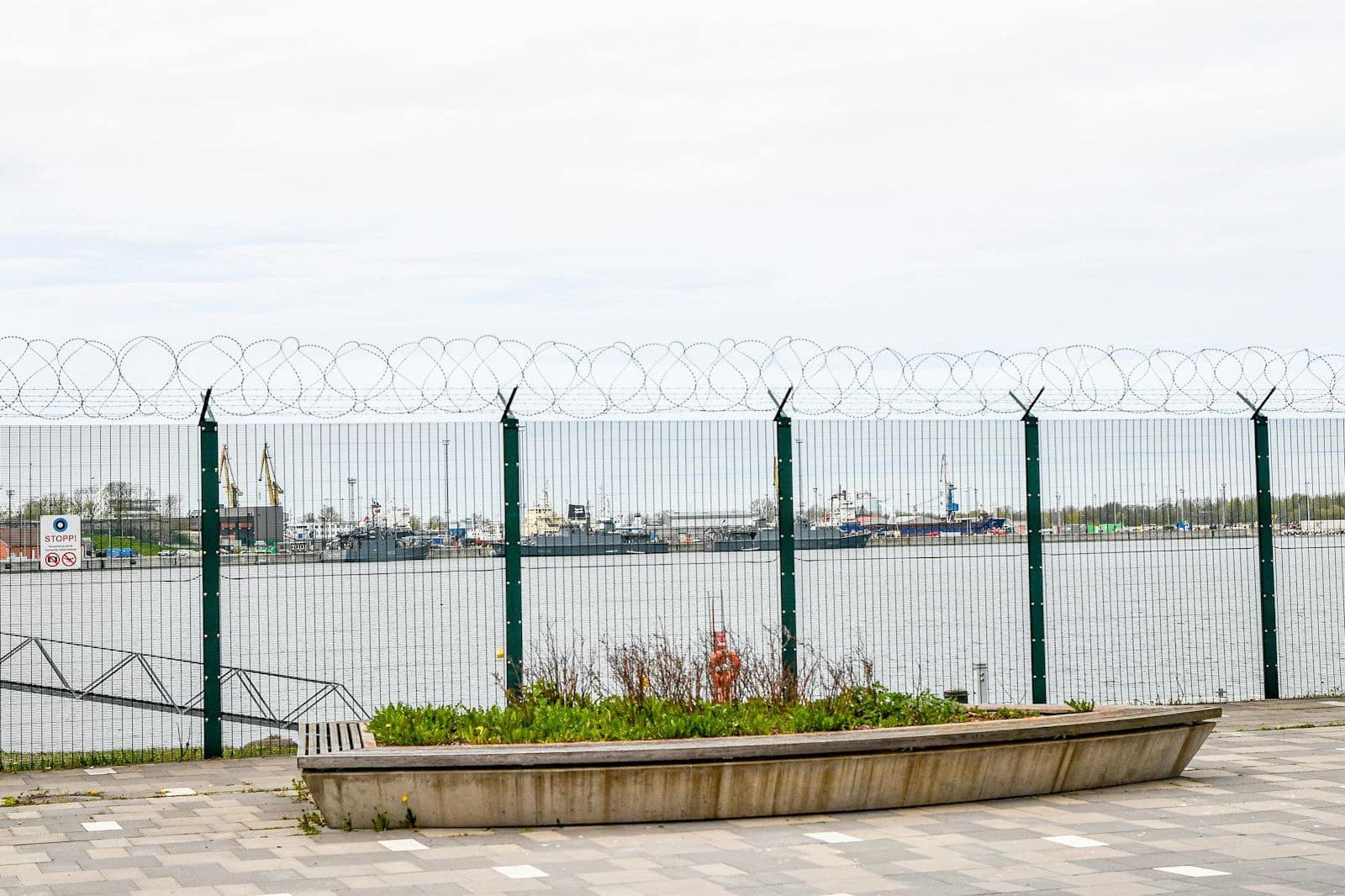
Ask a duty security officer at any container terminal a simple question at the height of a shift: how many people are inside the fence line right now, and where is each one standing? Most cannot answer with confidence. The gate log says a number. Reality says something else, because a contractor tailgated through a vehicle lane, a lashing crew moved from Berth 2 to a reefer yard nobody expected, and a surveyor walked into a restricted quay to chase a sample. The gap between the roster and the ground is where incidents live, and it is the gap that identity-based access control and real-time worker location tracking exist to close.
Two problems, one goal
A terminal has to solve two questions that look similar and are not. The first is who is allowed through the perimeter, verified at the gate. The second is where every one of those people is once they are inside, tracked continuously against the zones they are cleared for. Solve the first and lock the second, and you can still lose a confined-space worker in a tank for an hour without knowing. Solve the second without the first, and you are tracking people you never verified.
Access answers identity at a line on the ground. Location answers accountability across the whole footprint. Both feed one operational goal: at any moment, a named, verified person is where the operation expects them to be, and any deviation raises an alert before it becomes an incident or a security breach. That is the frame for everything below.
Biometric access control at the terminal gate
Port access control starts at identity. A card or a proximity credential proves possession of a token, not identity. Cards get shared, cloned, borrowed from a colleague on sick leave, and left in a truck cab. Biometric access control binds entry to the person: a fingerprint, an iris or facial match, or a hand geometry read tied to an enrolled record. For a facility operating under the ISPS Code, where the Port Facility Security Officer must control access and prevent unauthorized entry to restricted areas, biometrics raise the assurance that the person passing the reader is the person cleared in the plan.
Biometrics are not automatically the right answer everywhere. They are justified where the consequence of a wrong identity is high: the ISPS restricted-area boundary, a liquid-bulk manifold, a cruise terminal secure zone separating cleared passengers from operational areas, a gate feeding an explosives or dangerous-goods yard. For a low-risk contractor car park, a card or a mobile credential is proportionate and faster to administer. The test is the security value of certainty at that specific line, not the appeal of the technology.
The trade-off that decides most deployments is data. A biometric template is personal data of a special category in many regimes, and the rules are not uniform. Under the EU General Data Protection Regulation, biometric data used to identify a person is a special category with a high bar for lawful processing and a strong preference for proportionality and alternatives. The UK operates a parallel regime post-transition. Brazil's LGPD, and a growing set of national and sub-national laws elsewhere, impose their own consent, retention, and residency expectations. A global terminal operator cannot design one biometric scheme and roll it out identically across ports. The practical answers are consistent regardless of jurisdiction: store templates, not raw images; encrypt at rest and in transit; keep retention short and purpose-bound; offer a non-biometric route where the law demands it; and pin down where the data physically resides against each port's residency rules. Get this wrong and the security control becomes a liability.
Real-time location systems and geofencing inside the terminal
Verifying identity at the gate tells you nothing about the next eight hours. That is the job of a real-time location system. RTLS tracking places a position on each person, vehicle, or asset inside the perimeter and compares it continuously against the zones they are cleared for.
The underlying technology sits on a spectrum, and it is worth understanding at a high level without tying the decision to any vendor. Passive and active RFID confirm presence at read points such as gates and choke points but do not track continuously. Bluetooth Low Energy beacons give room-to-zone level location at low cost and long battery life, well suited to broad yard zoning. Ultra-wideband delivers sub-metre accuracy where precision matters, for example separating a walkway from a live quay edge, at higher infrastructure cost. GNSS covers open outdoor areas such as container stacks and RoRo decks but degrades inside sheds, tanks, and holds where steel blocks the sky. Most real terminals end up with a blend, because no single technology covers an open stack, a warehouse aisle, and the inside of a ballast tank equally well.
Geofencing is what turns raw position into control. Draw a boundary around a restricted ISPS area, a quayside strip, a fumigated hold, or a crane slew radius, and the system reacts when a tracked person crosses it. The alerts that matter in a terminal are specific:
- Restricted-zone entry. A person without clearance for a liquid-bulk manifold or a secure cruise zone crosses the line, and control room and supervisor are notified in real time.
- Quayside and man-overboard zones. A geofence along the berth edge flags a lone worker straying into the fall-and-drown strip, and integrates with water-side detection so a man-overboard event triggers position-anchored response instead of a shouted headcount.
- Lone-worker monitoring. A worker operating alone in a remote yard or an intermodal siding is tracked with no-motion and duress logic, so a slip behind a stack does not go unnoticed until the next radio call.
- Confined-space monitoring. Entry into a tank, hold, or void space is logged against the permit, dwell time is watched, and an overdue exit escalates automatically. This is where GNSS fails and short-range anchors earn their place.
The point is not surveillance. It is that the terminal's 3D facility map stops being a drawing and becomes a live picture of where people actually are against where the work plan says they should be.
The safety payoff
The clearest return is at the emergency muster. Every terminal drills evacuation, and almost every drill exposes the same weakness: the roll-call depends on paper lists, radio checks, and supervisors trying to remember who was on their gang. When a real gas release or fire happens, that method fails exactly when it is needed most.
Real-time headcount replaces it. At the moment an alarm sounds, the system already knows how many verified people are inside the perimeter and, by zone, where they were last seen. Evacuation roll-call becomes a comparison between who is accounted for at the muster points and who the system still places in the plant, so responders search for named individuals in known locations instead of sweeping the whole footprint blind. The difference in a smoke-filled shed or a listing RoRo deck is measured in minutes, and minutes are the currency of emergency response. The same HSSE foundation that underpins safe systems of work is what makes the data trustworthy in the first place.
The security payoff
On the security side, location closes the loop that access control opens. ISPS obliges the facility to enforce restricted-area boundaries. A gate reader enforces them at one line; geofencing enforces them everywhere else. Tailgating, the oldest defeat of any access system, becomes visible: when a verified badge opens a gate but the location layer subsequently reports more bodies in the zone than were cleared through, the discrepancy surfaces as an event rather than a mystery discovered on CCTV weeks later.
The audit trail is the second security dividend. National security regimes converge on the same expectation from different directions. US MTSA and 33 CFR 105 require the facility security plan to control access to restricted areas and to keep records. EU Regulation 725/2004 brings the ISPS Code into binding European law. The UK's port security regulations do the same domestically. In every case an inspector or a post-incident investigation asks the same thing: prove who was where, and when. A combined access-and-location record answers that question with a timestamped, per-person history instead of a stack of paper gate logs and best guesses. It also shortens investigations, because the movement of every person around an incident is reconstructable.
Doing it without a hardware rip-out
The reason many terminals stall on this is the assumption that it means gutting the site to install anchors, readers, and infrastructure across every berth and shed before seeing any value. That is one way, and it is expensive, disruptive, and slow to approve.
The software-first path starts where the data already exists: the visitor and contractor record. Every person who books in, every contractor with a validity window, every crew assigned to a berth already lives in the visit management layer. Stowlog's geolocation module ties real-time position to that existing record rather than to a parallel hardware universe, so the person a geofence flags is the same verified identity that came through the gate, with their clearances, their induction status, and their permit already attached. Mobile devices, existing gate hardware, and lightweight zone infrastructure feed positions in; the terminal chooses where precision is worth the cost, starting with the highest-consequence zones and expanding as the case proves out. The result is graduated: begin with software-driven geolocation against the people you already track, add short-range precision only where a manifold, a hold, or a quay edge demands it, and avoid the all-or-nothing capital decision that keeps the whole project on the shelf.
The perimeter and the zones inside it are the two halves of the same duty: know who is allowed in, and know where they are once they are. Stowlog's Geoposition module is built for that terminal reality, tying verified identity to live location so the number on the gate log and the picture on the ground are finally the same.