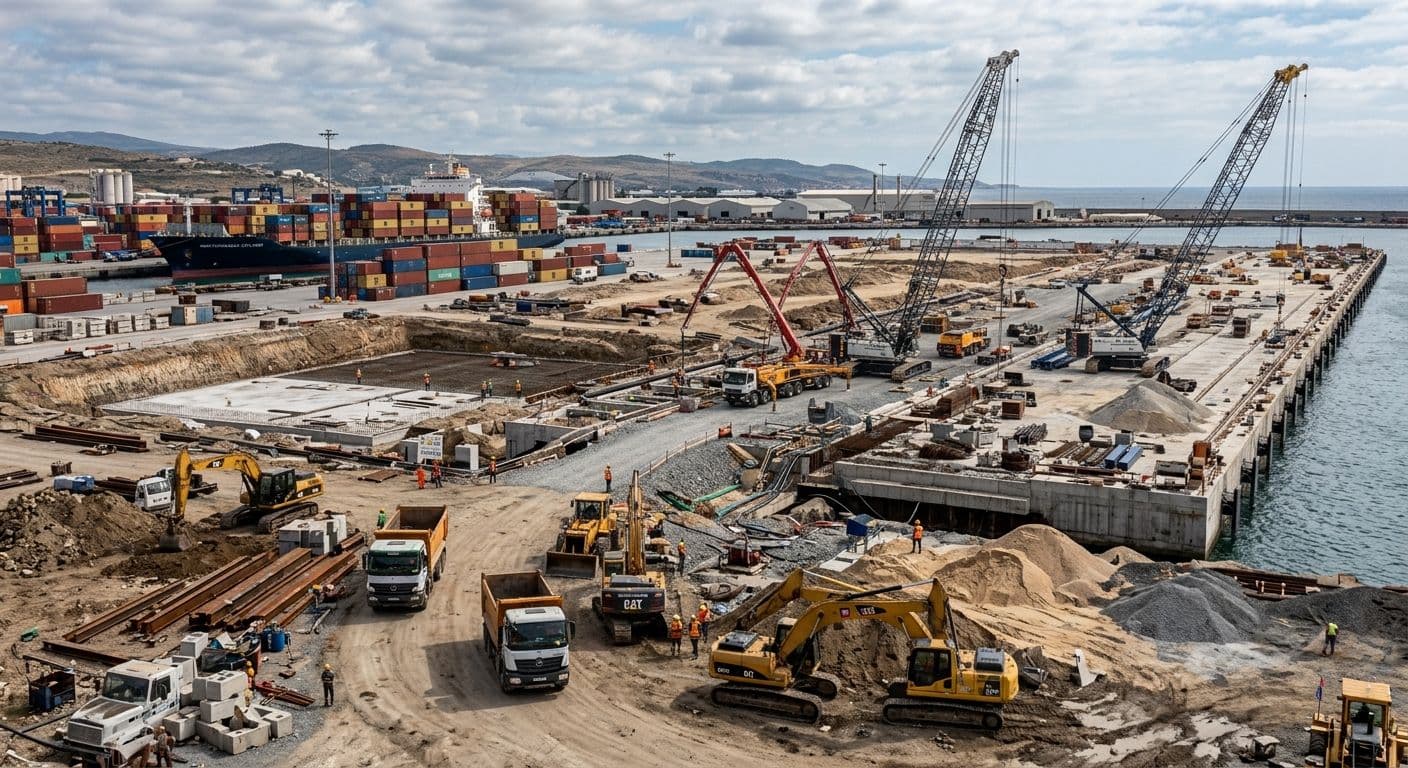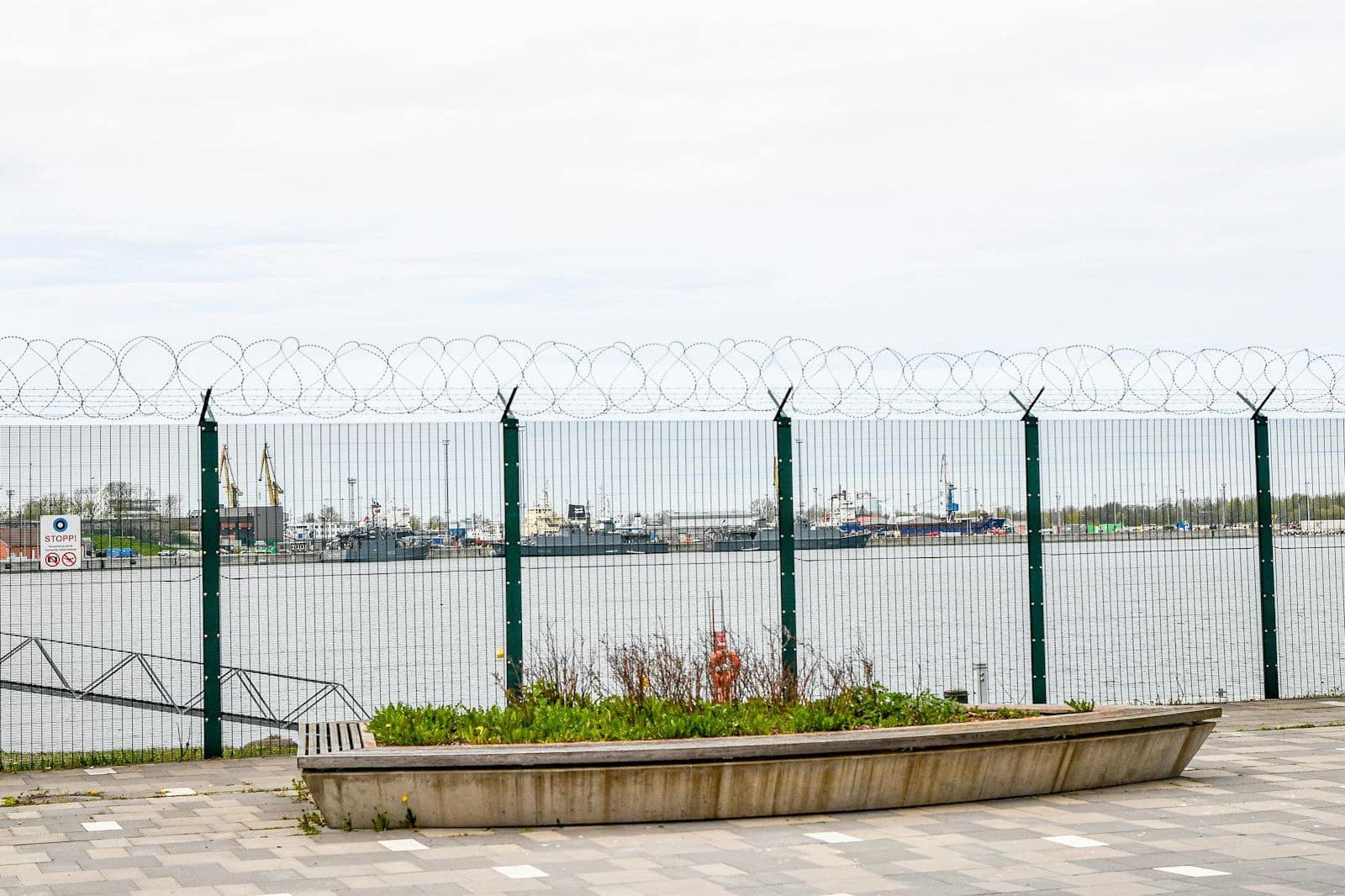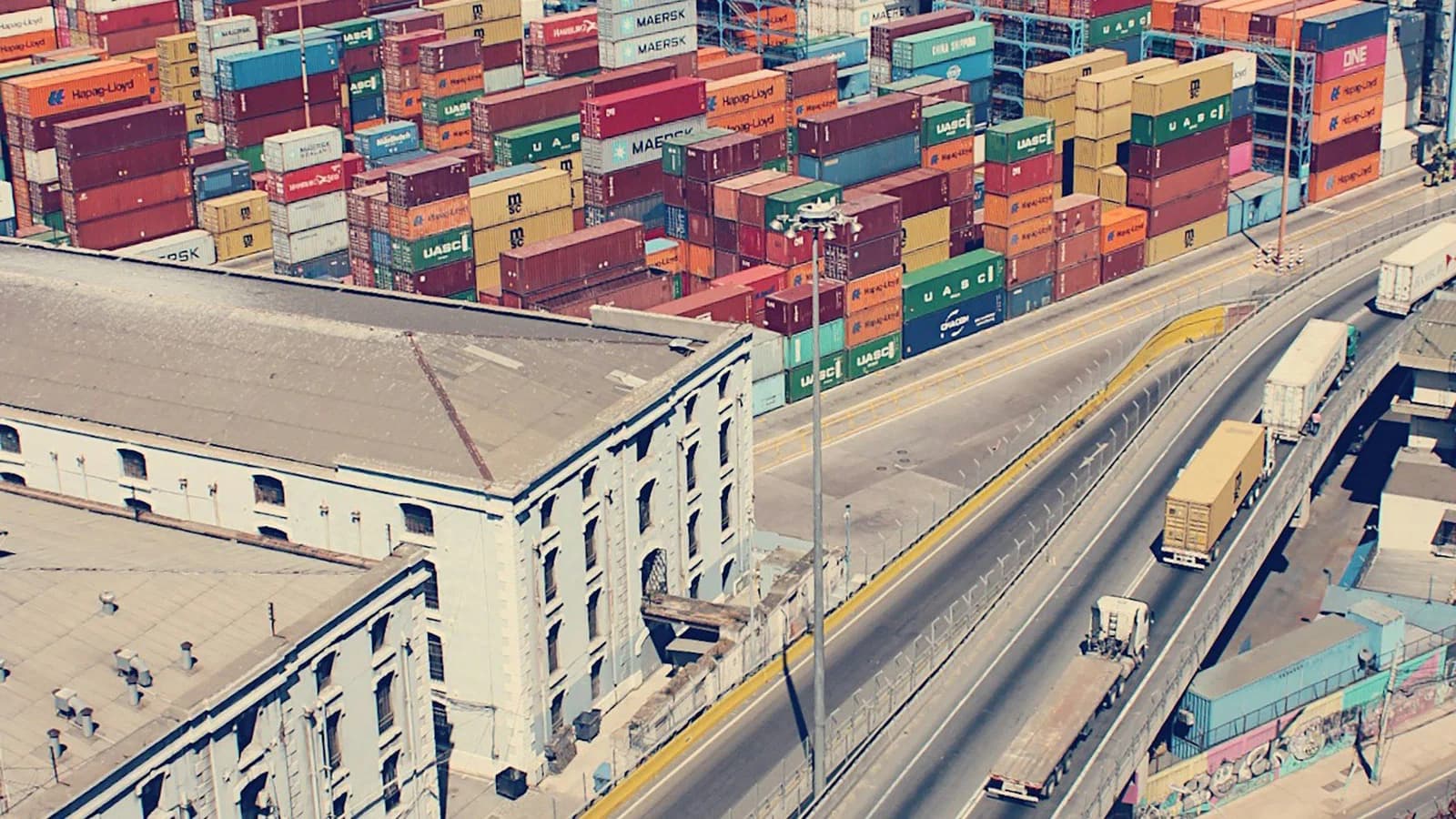

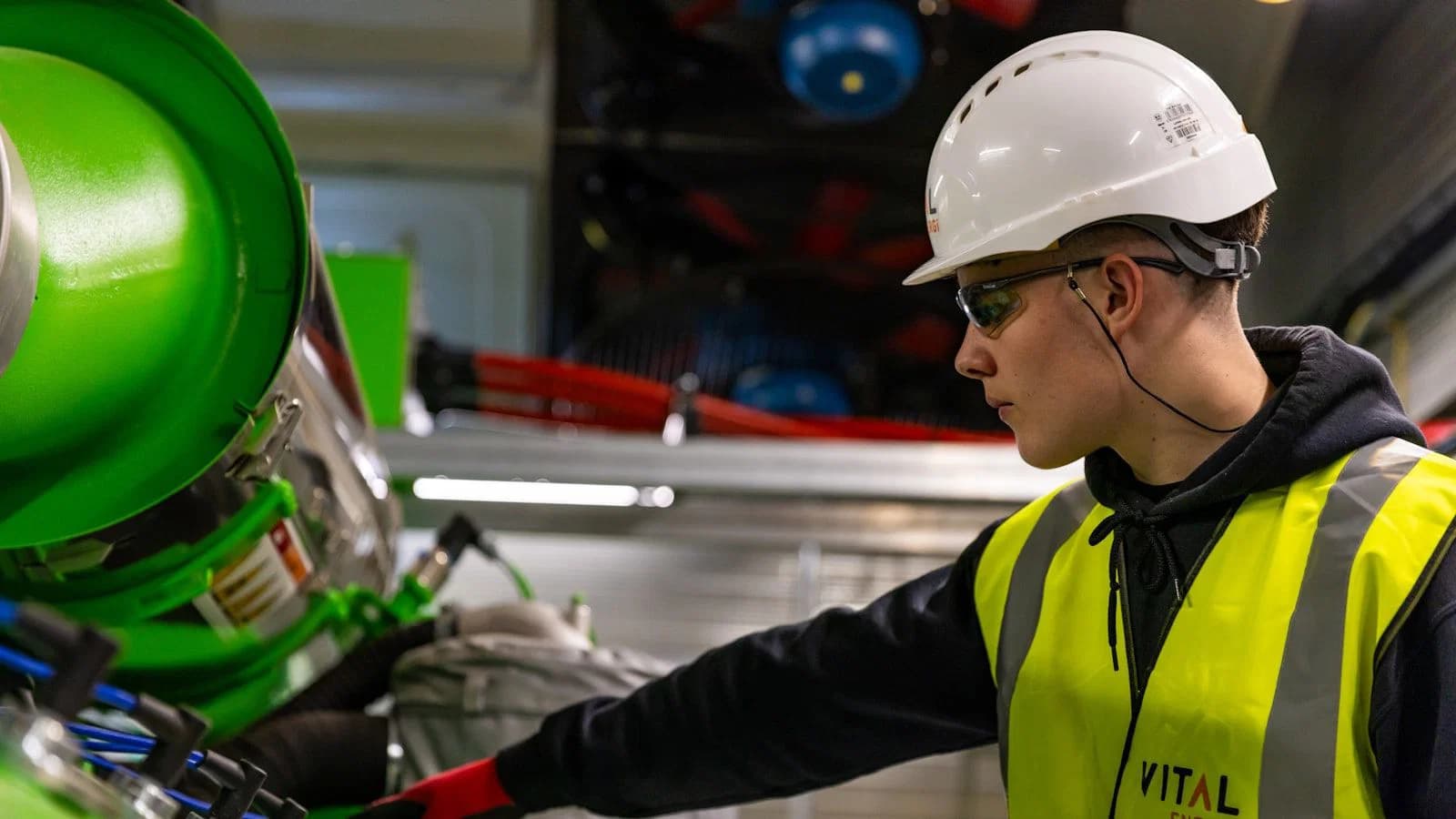
Health, Safety, Security and Environment (HSSE) at a port terminal is not a document in a binder. It is the sum of what happens on the ground every shift. A terminal with strong HSSE has fewer incidents, cleaner audits, lower insurance and operating cost, and a workforce that trusts it. A terminal with weak HSSE eventually pays for it, and rarely at a time of its choosing.
This guide is a practical walk-through of how a port-logistic facility actually builds and runs a strong HSSE programme, the international and national frameworks behind it, the hazards it has to manage, and the operational disciplines that move a terminal from "we have procedures" to "the safe way is the way work gets done".
What HSSE covers
HSSE brings four related disciplines under one management approach:
- Health: protecting workers from occupational illness and long-term harm: noise, dust, cargo and exhaust fumes, vibration, fatigue and manual-handling strain.
- Safety: preventing injuries from the immediate physical hazards of terminal work.
- Security: protecting the facility from unlawful acts, the domain of the ISPS Code.
- Environment: preventing pollution and managing the facility's environmental impact, from spills to emissions to waste.
The four are managed together because they share the same root tools, assessment, control, training, records, and because a failure in one is rarely contained to one. This guide focuses on the health and safety side; security is covered in depth in our ISPS guide.
The global regulatory backdrop
Occupational health and safety law is national, but it rests on a strong international foundation, and a terminal that operates in more than one country has to understand both layers.
The international baseline comes from the International Labour Organization (ILO). The Occupational Safety and Health (Dock Work) Convention, 1979 (No. 152) is the international labour standard written specifically for dock work, and the ILO Code of Practice on Safety and Health in Ports is the recognised international reference for how to run a safe terminal in practice. Many operators also align their management system with ISO 45001, the international standard for occupational health and safety management systems.
National law then sets the binding detail, and it varies by jurisdiction. To take a few examples: in the United States, marine terminals fall under OSHA's 29 CFR Part 1917; in the United Kingdom, the Health and Safety at Work etc. Act and the Docks Regulations; across the European Union, the OSH Framework Directive and its national transpositions; in Australia, the Work Health and Safety regime. A terminal group operating internationally has to know the regime at every location it runs, and, in practice, hold itself to the highest common standard rather than the local minimum.
Whichever framework applies, the expectation converges on the same four things: hazards identified, controls in place, workers trained and competent, and records kept. The rest of this guide is how a terminal delivers them.
The hazards a port terminal manages
A terminal concentrates several serious, fast-acting hazards into one operating area:
- Vehicle and pedestrian interaction: terminal tractors, reach stackers, straddle carriers, forklifts and external trucks moving in the same space as people. At most container terminals this is the single largest source of fatal risk.
- Lifting operations: quay cranes, yard cranes and handling equipment moving heavy loads overhead, with the risk of dropped loads and contact.
- Working at height: on equipment, structures, ladders and stacked cargo.
- Confined spaces: holds, tanks, ducts and enclosed structures, where the atmosphere and the access are hazards in themselves.
- Manual handling and dropped objects: lashing and securing work, stores handling, and anything that can fall from height or from a stack.
- Health exposures: noise, exhaust and cargo fumes, dust, vibration, and fatigue from shift patterns.
A real HSSE programme starts by knowing precisely which of these apply, where on the facility, and to whom, staff, contractors, hauliers and visitors are not all exposed to the same things.
The hierarchy of controls
Once a hazard is identified, the control chosen for it should sit as high as possible on the hierarchy of controls, the internationally recognised order of effectiveness:
- Elimination: remove the hazard entirely; design the task so no one has to work at height or enter the confined space at all.
- Substitution: replace it with something less dangerous.
- Engineering controls: isolate people from the hazard: barriers, guarding, segregated pedestrian and vehicle routes, edge protection.
- Administrative controls: change how people work: procedures, permits, training, signage, exclusion zones, speed limits.
- Personal protective equipment (PPE): the last line, protecting the individual when a residual hazard remains.
The common, expensive mistake is to reach straight for PPE and procedures because they are cheap and quick, while an engineering fix goes undone. A hi-vis vest does not stop a reach stacker; a segregated walkway does. A strong programme is judged by how far up the hierarchy its controls actually sit.
Start where the risk enters: induction
Most preventable incidents trace back to the same root cause, someone was not properly briefed on the hazards and rules of the area they were working in. The safety induction is the first line of defence, and it only works if it is consistent, every worker receives the same approved content, and verifiable, the facility can prove who was inducted, and when.
This is the single highest-leverage place to start, because it gates everything else: a worker who has not been inducted should not be on the operational area at all. See how digital safety inductions reduce incidents for how this works in practice.
Assess the risk before the work
Routine work runs on standing procedures. Non-routine and higher-risk work needs its hazards assessed and its controls agreed before it starts, not improvised on the day.
A job safety analysis, also called a job hazard analysis, is the standard tool: it breaks a task into its steps, identifies the hazard in each step, and attaches a specific control to each hazard. It turns "be careful", which is not a control, into something concrete, assignable and checkable. The output should be recorded, communicated to everyone doing the work, and revisited if the job or the conditions change.
Control high-risk work with permits
Some work is hazardous enough that a risk assessment alone is not enough. It needs formal authorisation before it can begin. Hot work, confined-space entry, working at height, electrical and mechanical isolation: these are controlled through a permit-to-work system, which confirms the hazards are assessed, the controls and isolations are in place, the people are competent, and the work is authorised for a defined area and time window. Our guide to permit to work at port terminals covers the workflow in detail.
Account for contractors
Contractors carry out a large share of the highest-risk work at a terminal, maintenance, construction, inspection, specialist services, and they are not directly employed by it. That does not reduce the terminal's responsibility for them. Contractors need the same standard of pre-qualification, induction, authorisation and on-site oversight as direct staff, and the terminal needs a live, accurate picture of which contractors are on site and what they are cleared to do. See visitor and contractor management for the full lifecycle.
Learn from what nearly went wrong
A near miss is an unplanned event that, by chance, caused no injury or damage, a load that swung clear, a pedestrian who stepped back in time. It is the cheapest warning a terminal will ever get, and the most wasted, because near misses are so often not reported.
A terminal that captures and acts on near misses is fixing hazards before they cost anything. A terminal that does not is paying full price for every lesson. A working near-miss reporting process, low-friction, no-blame, and visibly acted upon, is one of the strongest leading indicators a facility has.
When an incident does happen: investigation
No programme prevents every incident. What separates a strong terminal is what it does next.
A proper investigation looks past the immediate cause to the root cause. Not "the worker stepped into the path of the vehicle", but "pedestrian and vehicle routes were not segregated at that point, and had not been re-assessed since the yard layout changed". The immediate cause tells you who; the root cause tells you why, and the why is the only thing you can fix across the whole facility.
A useful investigation produces three things: a clear, factual account of what happened; the root causes, organisational as well as immediate; and corrective actions, each with an owner and a deadline, tracked to closure. An investigation that ends in a report no one acts on is an incident the terminal has paid for and learned nothing from.
Measure what matters
HSSE performance is easy to measure badly.
Lagging indicators, injuries, lost-time incident rates, fatalities, measure failures that have already happened. They matter, but they only describe the past, and on a well-run terminal they are mercifully rare, which also makes them statistically noisy.
Leading indicators, inductions completed before access, permits issued correctly, near misses reported, inspections and audits done on time, corrective actions closed within deadline, measure whether the system is working before an incident proves it is not. They are the early-warning system.
A strong programme watches both, and treats a fall in its leading indicators as seriously as a rise in the lagging ones.
Make the evidence a by-product
Every discipline above generates records: inductions, risk assessments, permits, near misses, incident investigations, inspections, training. In a paper or spreadsheet system, pulling those together for a regulator, an auditor, an insurer or a client is a separate, painful project every time.
When the same activities are captured digitally as work happens, the evidence is simply there, structured, time-stamped and exportable. HSSE reporting stops being a task and becomes a query. That is also what makes the difference in an investigation, where the question is always "show me", not "tell me".
Build the culture
Tools and procedures do not create safety on their own. Every experienced terminal operator has seen a thick safety manual sit alongside a poor safety record.
What tools and procedures can do is make the safe path the easy path, fast to follow, hard to skip, and consistent for everyone. When the safe way is also the path of least resistance, it gets followed without enforcement; when it is slower or harder than the shortcut, it does not. Repeated every shift, across every worker and contractor, that is what a real HSSE culture is built from, not posters, but the design of the work itself.
How Stowlog supports port HSSE
Stowlog brings safety inductions, risk assessment, permit-to-work, contractor management and incident and near-miss reporting into one platform built specifically for port-logistic facilities. Controls are enforced as work happens, no induction, no access, and the evidence is captured, structured and always ready. Stowlog connects through its open API to the Terminal Operating System and the other systems a facility already runs, so HSSE is part of the operation rather than a parallel paperwork exercise.
Sources and further reading
Frequently asked questions
What does HSSE stand for?
HSSE stands for Health, Safety, Security and Environment, the four related disciplines a port-logistic facility manages together to protect its people, its operations and its surroundings.
What regulations govern safety at a port terminal?
Port safety rests on two layers. Internationally, the ILO sets the baseline, notably the Occupational Safety and Health (Dock Work) Convention No. 152 and the ILO Code of Practice on Safety and Health in Ports, and many operators align with ISO 45001. National law then sets the binding detail, which varies by country, such as OSHA 29 CFR Part 1917 in the United States.
What are the main safety hazards at a port terminal?
The most significant hazards are vehicle and pedestrian interaction, lifting and crane operations, working at height, confined-space entry, and manual handling or dropped objects.
What is the difference between leading and lagging safety indicators?
Lagging indicators, such as injuries and lost-time incidents, measure failures that have already happened. Leading indicators, such as inductions completed, permits issued correctly and near misses reported, measure whether the safety system is working before an incident occurs.
Where should a terminal start to improve HSSE?
The highest-leverage starting point is induction, making sure every worker is consistently briefed before access, followed by risk assessment, permit-to-work control and near-miss reporting.
How does digital HSSE management reduce incidents?
It enforces controls as work happens, no induction, no access, ensures every worker receives the same briefing, makes near-miss reporting fast enough that workers actually do it, and keeps all the evidence ready for audits.
What is the hierarchy of controls?
The hierarchy of controls ranks safety controls by effectiveness: elimination, substitution, engineering controls, administrative controls, and personal protective equipment. The most effective controls remove or isolate the hazard; PPE is the last line. A strong programme pushes its controls as high up the hierarchy as the operation allows.
What is the difference between a near miss and an incident?
An incident has caused injury, damage or loss; a near miss is the same kind of event that, by chance, did not. A near miss is a free warning, capturing and acting on near misses lets a terminal fix hazards before they cause an incident.
How should a port terminal investigate a safety incident?
A proper investigation identifies the root cause, not just the immediate cause, and produces corrective actions with an owner and a deadline, each tracked to closure. An investigation whose actions are never closed out leaves the terminal exposed to the same incident again.