
Risk Assessment
Risk Assessment Software for Port Logistics
Identify, evaluate and control safety risks — ensure compliance and protect your workforce.
The problem
Manual risk assessments are time-consuming and prone to errors, putting your team and operations at risk.
RISK ASSESSMENT
Solution
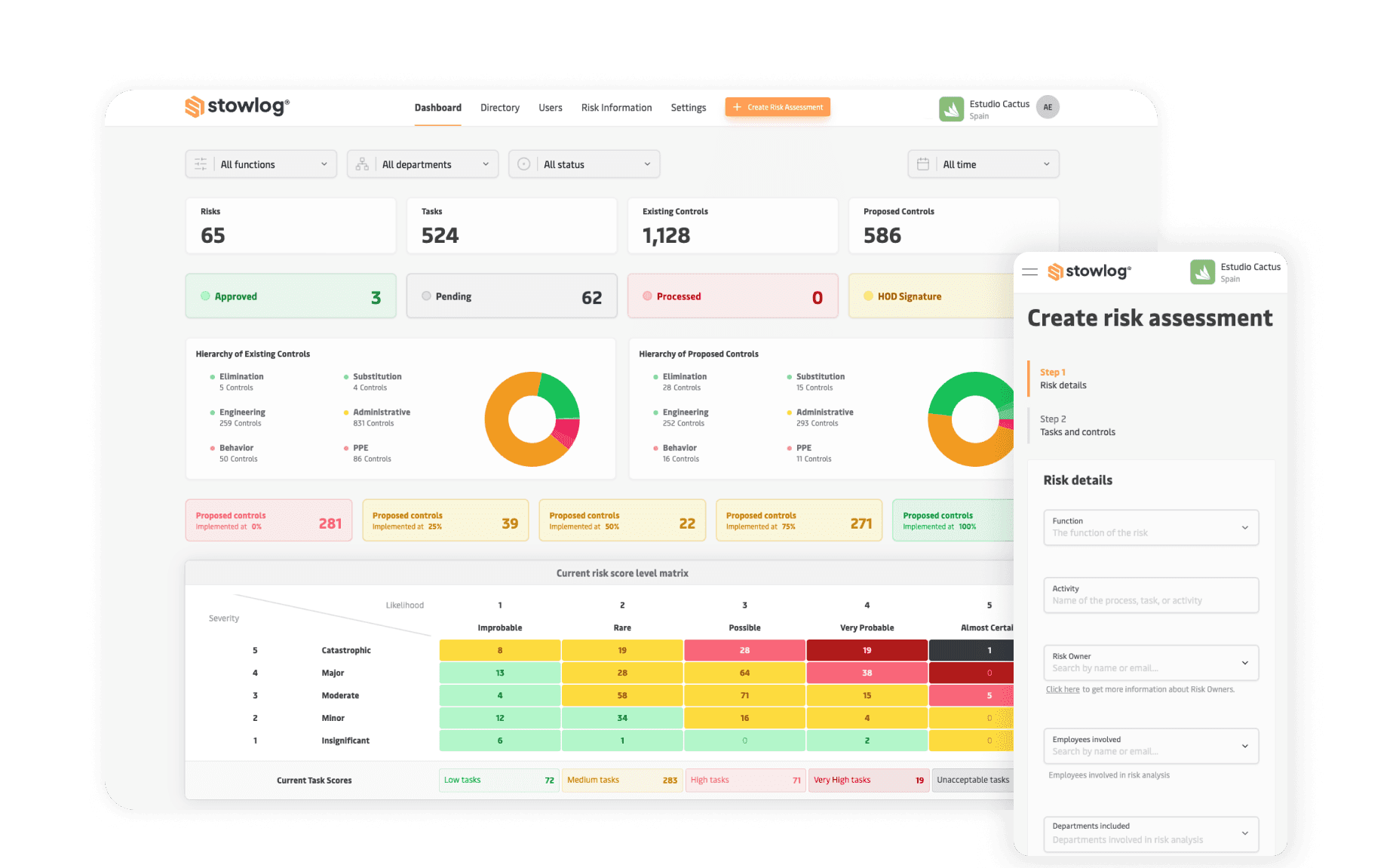
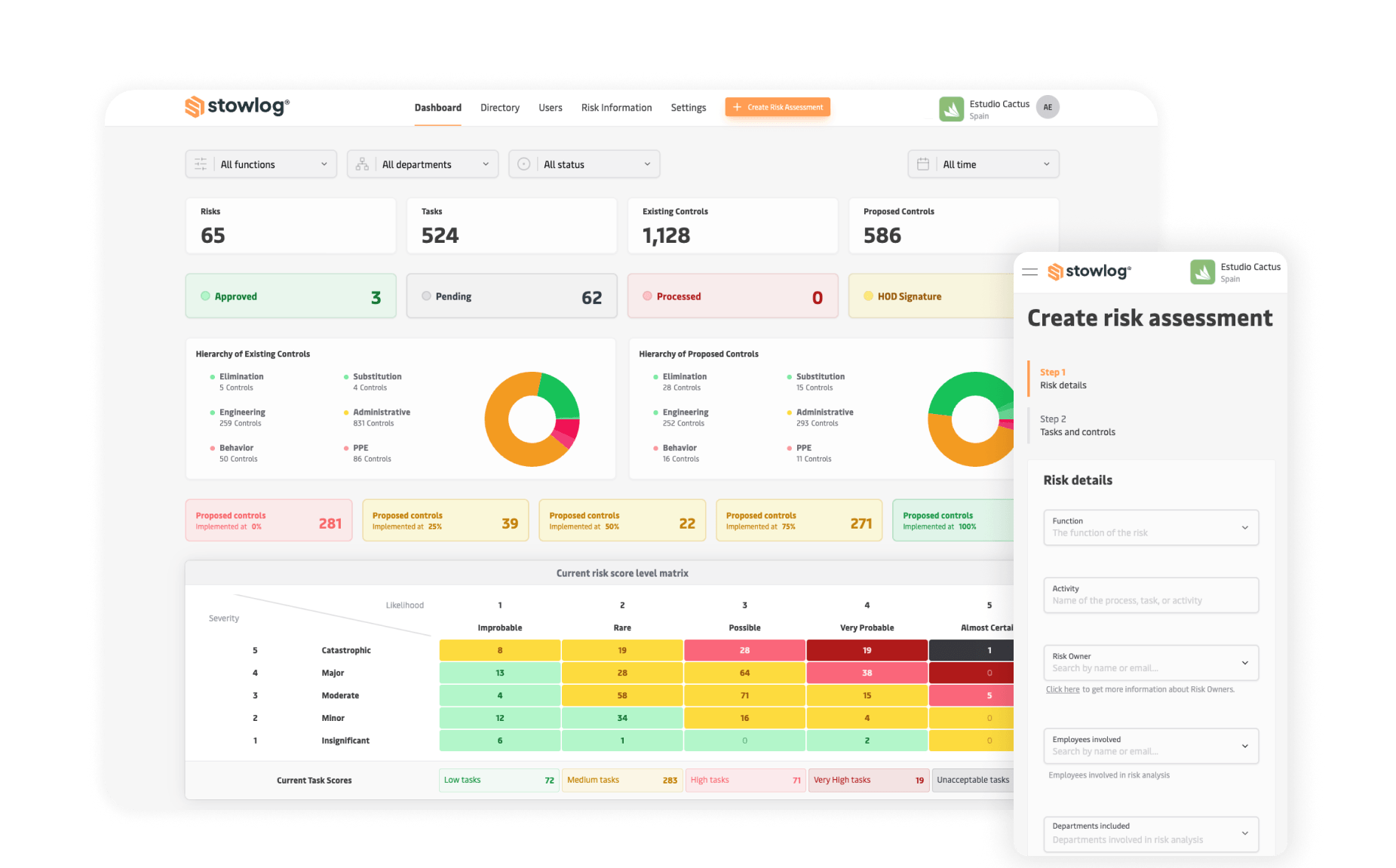
Risk Assessment software module of Stowlog digitizes your risk management process, making it faster, more accurate and easier to track. Identify hazards, implement controls and ensure regulatory compliance for safer port operations.
Identify, evaluate and control safety risks — ensure compliance and protect your workforce.
Key benefits
Digital and standardized risk assessments
Enhanced compliance with safety standards
Reduced incidents and improved workplace safety
Efficient prioritization of corrective actions.
FAQ
Frequently asked questions
What operations, HSSE and security teams ask before bringing Stowlog on site. Cannot find your answer here?
Talk to our teamWhy replace our manual risk assessments?
Manual risk assessments are slow and easy to do inconsistently, which leaves real hazards unaddressed. Stowlog makes the process faster and standardised, so every assessment across the facility follows the same structure.
What kinds of port risk does Stowlog cover?
Stowlog covers the safety and operational risks of port-logistic environments, from cargo handling and equipment hazards to security risks. It is built for terminals, so the hazards it surfaces reflect real port operations and not a generic checklist.
Can hazards and corrective actions be tracked to closure?
Yes. In Stowlog, each hazard an assessment identifies gets a control or corrective action that is assigned and followed through, so risks are resolved and not just recorded.
How does it help when an ISPS or HSSE audit arrives?
Stowlog stores every assessment digitally with its date, author, hazards and actions. When an auditor asks for evidence that risks are managed, it is one filtered export away instead of a search through paperwork.
Does it connect with the TOS and our other systems?
Yes. Stowlog connects to whatever Terminal Operating System you already have through its open API, so risk data and corrective actions sit alongside your operations. There is no integration project for your IT team to take on.
Can we adopt Risk Assessment on its own?
Yes. Stowlog is modular, so you can start with Risk Assessment alone and add inductions, contractor control or other modules later on the same platform.
Who carries out the assessments in Stowlog?
Assessments in Stowlog are typically carried out by supervisors and the HSSE team. Because the process is digital and standardised, the result is consistent no matter who completes it.
Can we see risk across the whole facility?
Yes. Stowlog brings every assessment into one place, so the HSSE team has a clear, current view of risk across the facility instead of records scattered in separate files.