
Port of Miami
Digitalizing Visitor Management for Streamlined Port Access and Security
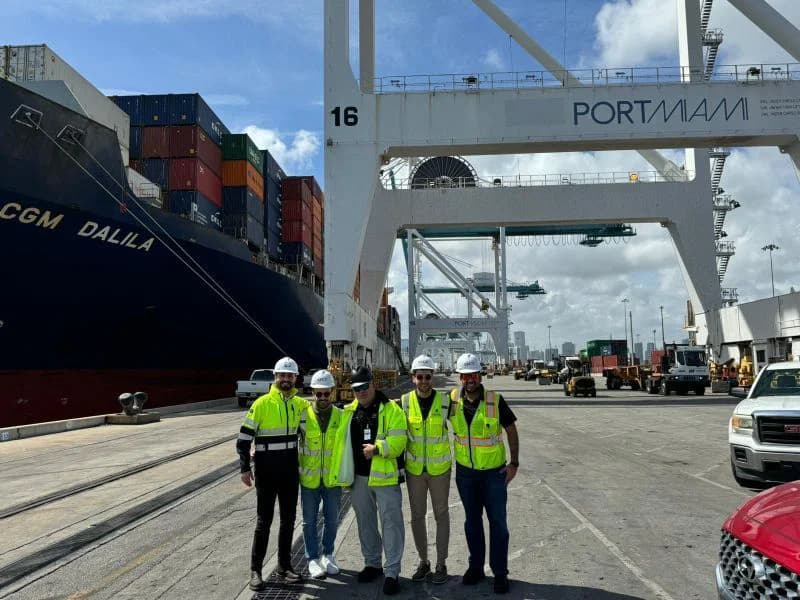
Client: South Florida Container Terminal (Miami, USA)
Challenge: Paper-based registration of external visitors
Solution: Deployment of the Visits Management module
South Florida Container Terminal (SFCT), a key container terminal in Miami, faced a recurring operational challenge: all external visitors were registered manually on paper. This approach slowed down gate operations, created administrative inefficiencies, and made it difficult to maintain accurate records or track who was inside the facility at any given moment. For a high-traffic terminal, relying on physical sheets represented a risk in terms of compliance, traceability, and overall safety.
To solve this, SFCT implemented the Stowlog Visits Management module, fully digitalizing the visitor registration workflow. All external personnel — truck drivers, contractors, inspectors, and visitors — can now pre-register online through the Stowlog App or website, while the terminal team manages and validates all visit requests directly from the Admin Dashboard. Upon arrival, visitors simply check in using their QR Authorization Pass, ensuring a faster, more secure process. The Visits Management module has enabled SFCT to replace a time-consuming and error-prone manual system with a modern, digital solution designed for port-logistic operations.
Benefits Delivered
- Elimination of paper-based processes, removing manual errors and lost records.
- Faster check-in and check-out procedures, reducing waiting times at the gate.
- Full traceability in real time of all visitors inside the terminal.
- Enhanced security and compliance, with centralized and easily accessible visitor data.
- Improved coordination between HSSE, security, and administrative teams.
- Better visitor experience, thanks to a smoother entry workflow and digital confirmations.
With Stowlog, South Florida Container Terminal has strengthened the security, efficiency, and professionalism of its visitor management process — a key step toward a fully digital and traceable port-logistic environment.